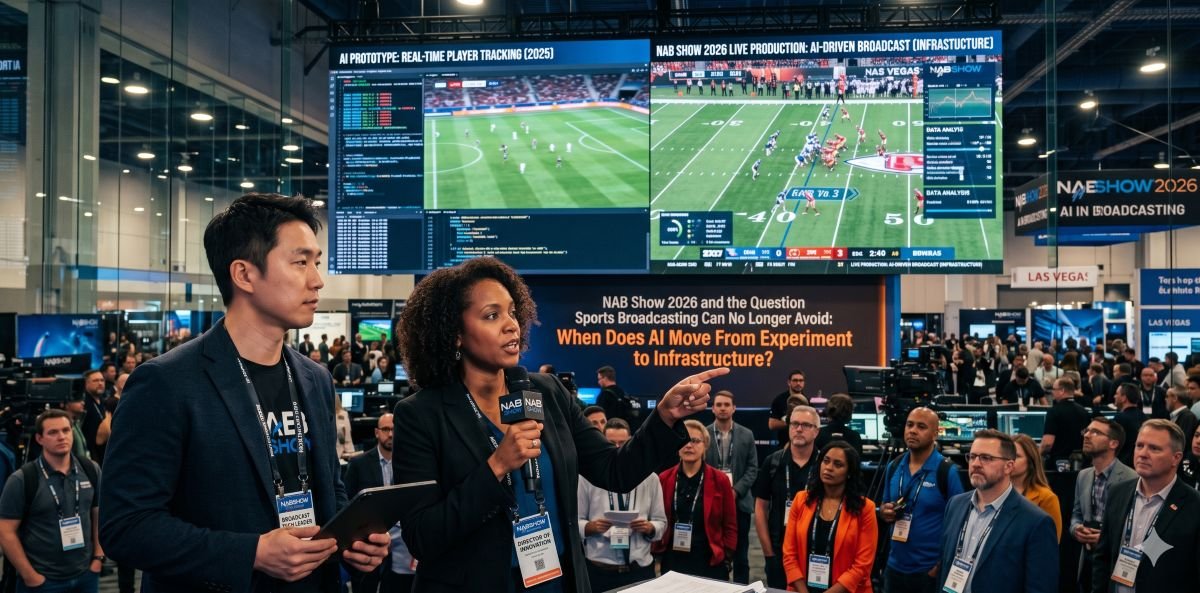


The landscape of the South Korean sports industry is undergoing a structural renovation, moving away from traditional management toward a sophisticated, data-driven architecture. On April 11, 2026, this transition took center stage at the Korean Society of Sport Management (KSSM) Spring Academic Conference held at Yonsei University. Titled the “AI and Data Transformation Era,” the summit gathered academics, tech innovators, and club executives to dissect the shift from “Data Collection” to “Data Transformation” (DT).
For the sports community in Anyang and the broader Gyeonggi-do region, the takeaways from this conference provide a roadmap for how local institutions—from professional clubs to public sports facilities—will operate in the coming decade.
Moving Beyond Collection: The Philosophy of Data Transformation
For years, sports organizations have collected data: ticket sales, concession revenue, and basic player statistics. However, as speakers at the KSSM conference noted, “collection” is a passive act. The new era is defined by Data Transformation (DT), a process where raw data is integrated into an active decision-making engine.
This is particularly relevant for regional hubs like Anyang. When a club like FC Anyang evaluates its seasonal performance, the focus is shifting toward the predictive power of information. It is no longer enough to know how many fans attended a game; the industry is now asking why they attended and how their behavior can be modeled to ensure the club’s long-term sustainability.
1. Operational Optimization: AI in the Back-Office
One of the most analytically grounded segments of the conference focused on Operational Optimization. Traditionally, stadium management has been reactive. If a match saw a sudden surge in attendance, concession stands were overwhelmed; if attendance lagged, resources were wasted.
AI is now being integrated into the back-end of sports management to create predictive models for attendance. These models utilize multi-variable functions to forecast crowd density with high accuracy. For example, a stadium’s operational resource allocation can be modeled as:
Where $P(A)$ is the predicted attendance, $W$ represents weather conditions, $T$ the time of day, and $S$ the current league standing. By applying these formulas, Gyeonggi-do sports bodies can optimize everything from security staffing to electricity usage, reducing the carbon footprint and operational costs of large-scale venues.
2. The Era of “Liquid Content”
The conference also addressed a major shift in fan communication. The industry is moving away from “broadcast-only” media—where a single feed is sent to all viewers—toward “Liquid Content.” This refers to sports media that is modular, digital-first, and adapts to the user’s context in real-time.
This shift is a response to how digital infrastructure has changed the way we perceive and interact with games. This evolution is part of a broader trend where sports broadcasting has evolved from radio to interactive streams, creating a more fragmented yet personalized viewer experience.
In Anyang, this means that the way a fan engages with a match on their smartphone while riding the subway might look entirely different from the feed seen by a fan at a local sports bar. The content “flows” into the format that best suits the viewer’s current environment. This is deeply connected to how the K League is using generative AI to transform its broadcast identity, ensuring that the league remains relevant in a high-speed digital market.
3. The Anyang-Gwacheon Tech Cluster and the 7 Billion KRW Fund
Perhaps the most significant news for the local economy was the discussion surrounding the newly established 7 billion KRW Sports Tech Fund. This government-backed initiative is designed specifically to nurture small and medium-sized enterprises (SMEs) specializing in sports analytics and wearable technology.
The conference highlighted the Anyang-Gwacheon corridor as a primary beneficiary of this fund. The region is already home to a high density of IT firms and software developers. By injecting capital into this specific niche, the government aims to create a “Sports Silicon Valley” in Gyeonggi-do. This fund is not merely a subsidy; it is a strategic investment in the intellectual property of sports, focusing on:
Wearable Biometrics: Tools that track athlete health to prevent injury.
Computer Vision: Systems that automate the tracking of ball and player movement without the need for manual input.
Fan Engagement Analytics: Software that helps municipal sports bodies understand how residents use local parks and recreational facilities.
A New Standard for Sports Literacy
The 2026 KSSM Spring Conference made one thing clear: the “architecture” of sports is no longer made of just steel and concrete. It is built on data points, algorithmic transparency, and digital accessibility. For the readers of AnyangInsider, understanding these shifts is essential for maintaining a foundational knowledge of how modern sports systems function.
As these technologies move from the academic halls of Yonsei University to the stadiums of Anyang, the focus remains on educational and responsible growth. The goal is a sports ecosystem that is more efficient, more engaging, and more deeply rooted in the technological strengths of our region.