

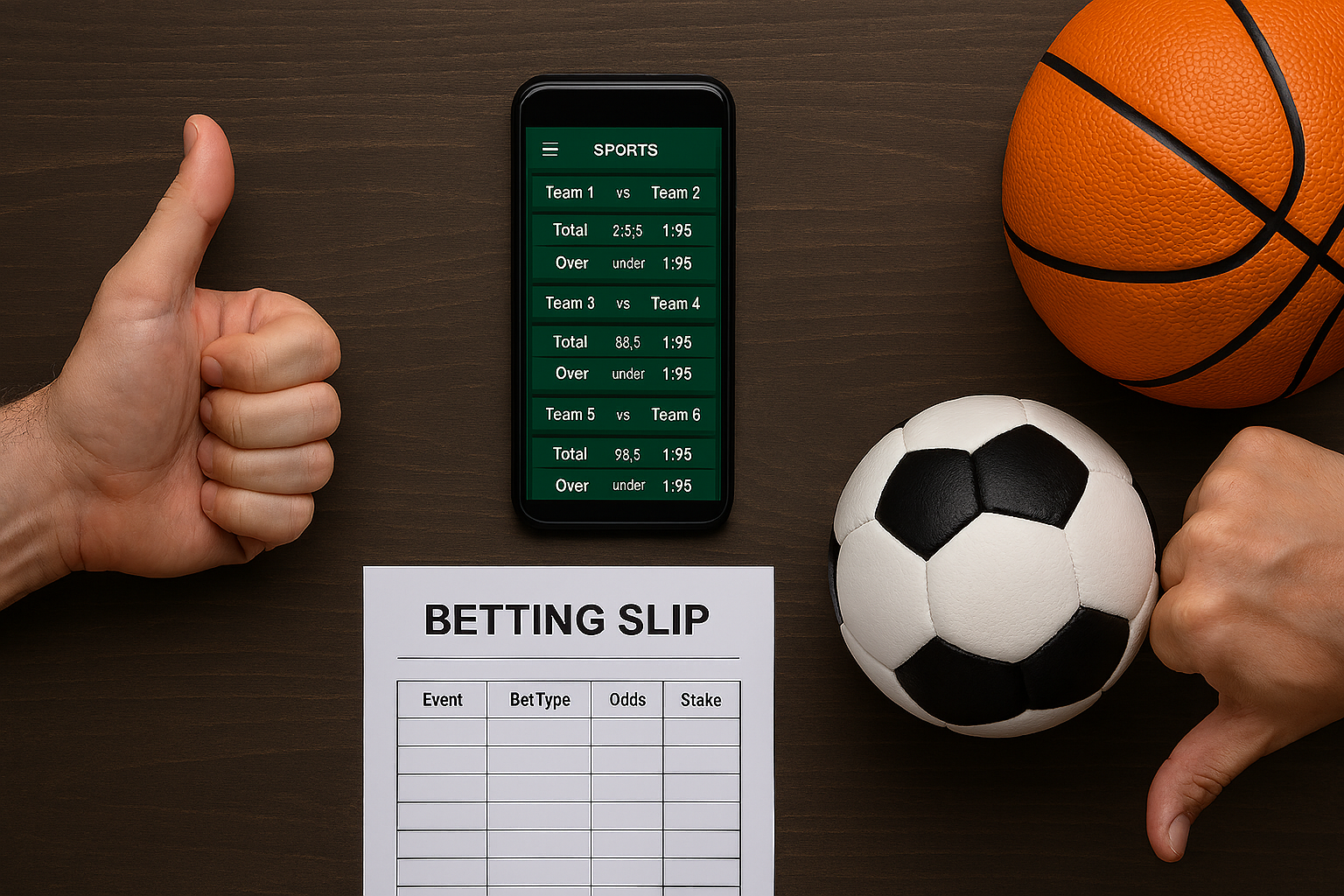
Many people find that betting on totals, also known as Over/Under markets, feels simpler than picking a match winner because it offers a clear choice between only two outcomes. While a standard match result requires a person to decide which team will win or if the game will end in a draw, a total bet only asks if the combined score of both sides will be higher or lower than a specific number. This removes the need to pick a side and allows a person to benefit from every goal or point scored by either team, which reduces the mental pressure of favoring one group over another.
The Power of Two Choices
In many popular sports like football, a standard bet on the outcome has three possible results. A person can choose a home win, an away win, or a draw. This is often called a 1X2 market. Mathematically, having three options makes the decision more difficult because there are more ways to be wrong. If a person chooses the home team to win, they lose if the away team wins or if the game ends in a tie.
Totals are different. A bookmaker sets a line, such as 2.5 goals in a soccer match. The person only has to decide if there will be three or more goals, known as the Over, or two or fewer goals, known as the Under. Having only two choices feels much more like a 50/50 situation. Even if the math is not perfectly equal, the human brain finds it easier to process a choice between two things than a choice among three.
The Psychological Ease of the Over
A significant reason why totals feel easier is tied to how people enjoy sports. Most fans want to see scoring. When a person bets on the Over, their interest aligns with the natural flow of the game. Every time a team attacks, the person feels they are getting closer to winning their bet. It does not matter which team scores the goal. A mistake by a defender or a brilliant shot by a striker both help the person who bet on the Over.
This creates a feeling of “rooting for the game” rather than rooting against a specific team. Joseph Buchdahl, a respected sports betting analyst, has observed this behavior in many people. He notes that recreational bettors frequently prefer the Over because it keeps their bet “alive” for a longer time. If a person bets on a team to win and that team is losing 3-0 at halftime, the bet feels finished. However, if the person bet on Over 3.5 goals, they only need one more goal to win, no matter who scores it.
Original Data: Market Preferences and Choices
The following data compares the number of outcomes and typical betting interest in a professional soccer league. This shows why the simplicity of totals attracts so many people.
| Bet Type | Number of Outcomes | Probability of a “Live” Bet at 80 Minutes | Popularity Among Casual Fans |
| Match Result (1X2) | 3 | 45% | High |
| Totals (Over/Under) | 2 | 75% | Very High |
| Correct Score | 20+ | 15% | Low |
The data suggests that a total bet is much more likely to remain exciting until the very end of a match. This constant feeling of being “in the game” makes the bet feel easier to manage, even if the actual statistical chance of winning is the same as other markets.
Decision Making
Professional bettors often warn that feeling easy does not mean it is easy to win. Bill Krackomberger, a professional sports bettor with decades of experience, says that people like totals because they think they understand how a game will go. He explains that a person might think two high scoring teams will always produce an Over. However, he warns that the bookmakers also know this and adjust the lines to make them very accurate.
Another expert, data scientist Dr. Ian McHale, has mentioned that totals are often more “efficient” than other markets. This means the odds usually reflect the true probability very well. He says that while it feels easier to choose between two options, finding a mistake in the bookmaker’s math on totals is actually quite difficult. The feeling of ease comes from the simplicity of the question, not the ease of the answer.
Storytelling: The Saturday Afternoon Watch
Imagine two friends, Sam and Alex, watching a basketball game. Sam bets that the home team will win the game. Alex bets that the total points will be over 210.
As the game begins, the home team starts to play poorly. They miss shots and commit fouls. Sam becomes frustrated. Every time the away team scores, Sam feels like he is losing. His experience of the game is tied to the success of one group of people. If the home team falls behind by 20 points, Sam stops enjoying the game because his bet feels hopeless.
Alex has a different experience. He is watching the total score. When the away team scores a three-pointer, Alex is happy because the total is moving toward 210. When the home team scores, he is also happy. He does not care who wins the game. He only cares about the pace of the play. Because he can find a reason to be happy with almost any basket, the bet feels “easier” to him. It is less stressful because he is not fighting against the performance of half the players on the court.
The Illusion of Control
A final reason why totals feel easier is that people feel they have more control over the data. It is easy to look at a team and see that they have scored many goals in their last five games. A person can quickly add these numbers up and feel like they have a strong plan. Predicting a winner requires looking at injuries, motivation, and historical rivalries between two specific teams. Predicting a total feels like it only requires looking at a team’s general style of play.
Binary choices reduce mental effort.
“Over” bets allow you to cheer for all players.
The bet often stays active until the final whistle.
Simple math creates a sense of confidence.
While these factors make the market feel approachable, it is helpful to remember that bookmakers use complex computers to set these lines. The feeling of ease is a psychological effect. It comes from the way the bet is presented and how it fits with our natural desire to see a high scoring, exciting game.