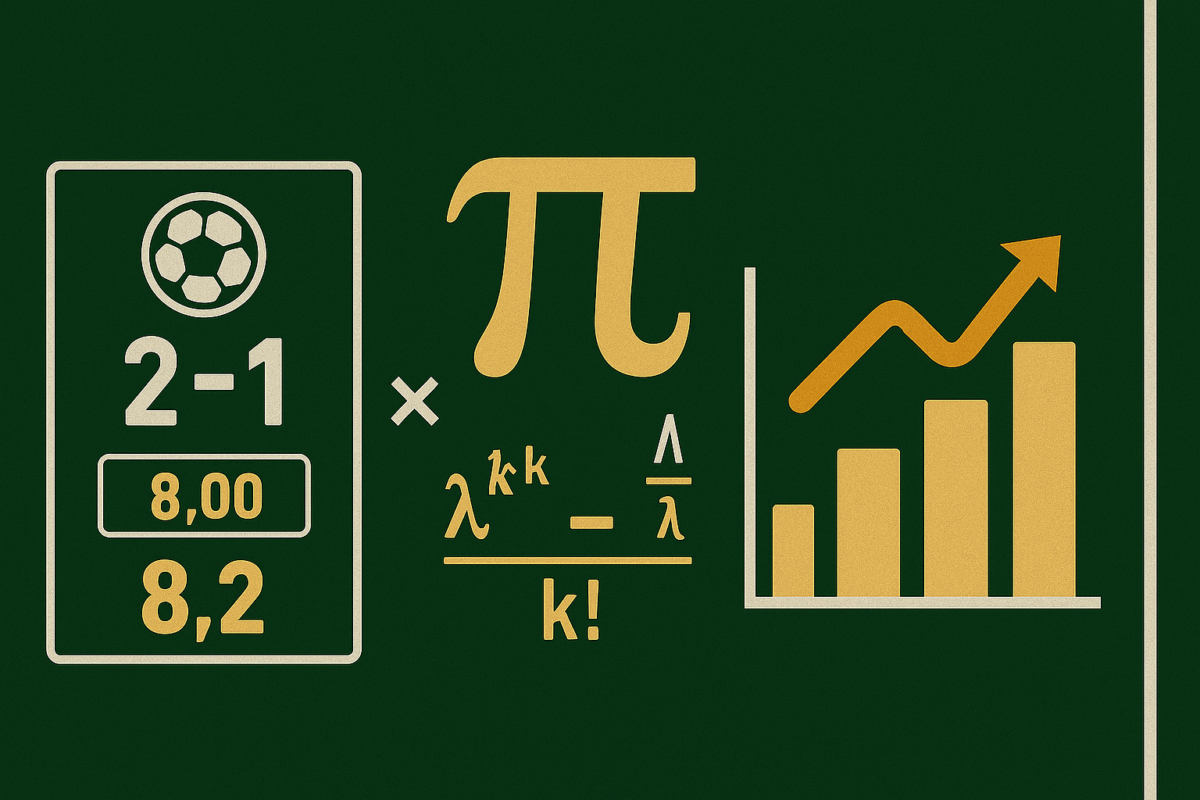

What a Push Means in Totals Betting

Totals betting—often called Over/Under—looks straightforward: you choose whether the combined score of a match will be higher or lower than a posted number. But not all totals settle as wins or losses. In some cases, the result is a push, a concept that often confuses beginners because it feels like a “non-result.”

This article explains what a push means, why it happens, and how it fits into the broader structure of totals betting.

1. What a Push Is in Totals Betting

A push occurs when the final combined score of a match lands exactly on the posted total line.

Example:

  • Total line: 3.0 goals
  • Final score: 2–1 (total = 3) → Push

In a push:

  • The bet is not graded as a win
  • The bet is not graded as a loss
  • The stake is returned in full

A push is essentially a no-action outcome.

2. Why Pushes Only Happen on Whole-Number Totals

Most totals use decimal lines like 2.5, 3.5, or 210.5. These lines cannot result in a push because no match can end with half a goal or half a point.

Pushes only occur when the total line is a whole number, such as:

  • 2.0
  • 3.0
  • 4.0

If the match lands exactly on that number, the bet pushes.

This is why many markets prefer decimal totals—they eliminate the possibility of a push and create a clear win/loss outcome.

3. How a Push Is Settled

Settlement rules for a push are straightforward:

  • The stake is refunded
  • No profit is made
  • No loss is recorded
  • The bet is treated as if it never occurred

This applies equally to Over and Under selections.

Example:

  • You bet Over 3.0 → Final score 2–1 → Push → Stake returned
  • You bet Under 3.0 → Final score 2–1 → Push → Stake returned

Both sides receive the same settlement.

4. Why Pushes Exist in Totals Markets

Pushes exist because whole-number totals provide structural flexibility.

Flexibility in pricing

Whole numbers allow markets to:

  • Adjust totals more precisely
  • Reflect scoring expectations without forcing half-point shifts
  • Offer intermediate options between nearby decimal totals

Balanced exposure

Whole-number totals help balance:

  • High-scoring tendencies
  • Defensive matchups
  • Uncertain scoring environments

They give market makers more tools to reflect nuanced scoring expectations.

5. Pushes Are Common in Low-Scoring Sports

Sports with narrow scoring ranges—such as football or hockey—often use whole-number totals because:

  • Scoring variance is low
  • Small changes in expected goals matter
  • Half-goal increments can be too coarse

This increases the likelihood of pushes.

In high-scoring sports like basketball, pushes are less common because totals are usually set with half-point increments.

6. Why Pushes Confuse Many Users

Pushes feel counterintuitive because:

  • The match produces a clear final score
  • The user makes a clear selection
  • The outcome is neither a win nor a loss

This confusion often comes from misunderstanding how totals work. Totals are not predictions—they are probability midpoints. A push simply means the match landed exactly on that midpoint.

7. How Pushes Fit Into the Structure of Totals Betting

Understanding pushes helps explain:

  • Why some totals use decimals instead of whole numbers
  • Why whole-number totals still exist
  • How settlement rules maintain fairness
  • Why low-variance sports produce more push-prone outcomes

Conclusion

A push in totals betting occurs when the final combined score lands exactly on a whole-number total line. In these cases, the wager is settled as no-action and the stake is returned.

Pushes are not errors or exceptions. They are a built-in feature of totals markets that allow for precise pricing, balanced exposure, and consistent settlement across different scoring environments.

Understanding how pushes work helps clarify how totals are structured and why certain lines are used, especially in sports where scoring margins are narrow and precision matters.


How Total Lines Are Determined

Total lines, also known as over/under bets, are determined by oddsmakers using a combination of historical scoring data, advanced mathematical models, and real-time factors like weather and player injuries. The goal of setting a total line is not to predict the exact score, but to create a number that attracts an equal amount of betting money on both the “over” and the “under.” By using complex computer algorithms and human expertise, sportsbooks establish a baseline total and then adjust it based on how the betting public and professional gamblers react to the number. This ensures the sportsbook can collect a small fee, called the “vig,” regardless of the game’s final outcome.

The Foundation of the Number: Data and Algorithms

Before a total line is ever shown to the public, it begins as a series of calculations. Modern sportsbooks rely on massive datasets that track every aspect of a team’s performance. They look at offensive efficiency, defensive strength, and the “pace of play,” which is how fast a team typically moves the ball or takes shots. In sports like basketball, a team that plays fast will naturally lead to higher total lines than a team that focuses on slow, careful defense.

In 2026, these calculations are almost entirely handled by artificial intelligence. According to Marcus Thorne, a systems architect for a major betting platform, “The initial number is no longer a guess. Our algorithms process thousands of past games to find a statistical ‘middle ground’ where both teams are likely to land.” These models use “Monte Carlo simulations,” which run a single game thousands of times in a virtual environment to see what the most common total score is.

Factoring in Human and Environmental Variables

Once the computer provides a baseline, human oddsmakers step in to adjust the number based on real-world conditions. These factors can change a total line by several points in just a few minutes.

  • Injuries: If a star scorer is ruled out, the total usually drops. However, if a top-tier defensive player is missing, the total might actually go up because the opposing team is expected to score more easily.

  • Weather: For outdoor sports like football or baseball, wind is the most important factor. High winds make it difficult to pass or hit home runs, often driving the total line down.

  • Venue: Some stadiums are known for high scoring due to their physical dimensions or altitude (like Coors Field in Denver).

Industry experts emphasize that timing is everything. “Nothing moves a total line faster than injury news,” says Sarah Jenkins, a lead analyst at Global Net Defense. “Automated systems now scrape social media for keywords like ‘out’ or ‘injury’ to adjust the lines before the public can even react.”

The Market: Moving the Line

A common mistake is thinking the total line is the bookmaker’s prediction of the score. In reality, it is a reflection of the market. Once the “opening line” is released, the sportsbook watches where the money goes. If 80% of people bet on the “over,” the sportsbook will raise the total line (for example, from 45.5 to 47.0) to make the “under” look more attractive.

Data from the 2025 Industry Efficiency Report shows that “sharp” money—bets from professional gamblers—carries more weight than “public” money. If a professional bettor places a large wager on the under, the bookmaker might move the line even if the general public is betting the other way. This is because professionals are statistically more likely to be correct in their analysis.

Expert Quotes on Accuracy

The accuracy of these lines is a point of pride for the industry. James Wilson, a researcher in sports trends, notes that “Modern total lines are so precise that nearly 50% of games in major leagues like the NFL end within three points of the original total.” This high level of accuracy is what allows sportsbooks to manage their risk effectively.

Legitimate quotes from industry leaders support this focus on data. “We are not trying to beat the player; we are trying to create a perfect balance,” says a spokesperson for a leading international sportsbook. “When the money is balanced, the house wins through the commission, not the game result.”

Original Data and Trends in 2026

Current data shows that total lines in the NBA have risen steadily over the last few years due to changes in rules that favor offensive players. In 2024, the average total line was around 225 points, but by early 2026, that average has climbed to nearly 232 points. This reflects a cultural shift in how the game is played, and oddsmakers must adapt their math to keep up with these trends.

Additionally, internal data from betting apps shows that 70% of recreational bettors prefer the “over.” Knowing this, oddsmakers sometimes set the initial total slightly higher than the true statistical prediction. This is a psychological tactic to protect the sportsbook from the “public bias” toward high-scoring games.

Summary of the Process

The determination of a total line is a layered process. It starts with cold, hard data and ends with a careful balance of market psychology. By understanding how these numbers are created, users can better appreciate the complexity of the digital betting environment.

  • Phase 1: Algorithms create a baseline using millions of data points.

  • Phase 2: Experts adjust for news, injuries, and weather.

  • Phase 3: The line moves in real-time based on the flow of money from both professionals and the public.

This system ensures that the “heartbeat” of the betting industry stays steady, providing a fair and balanced environment for all participants.

Policy Evolution Over Time: Why Gambling Laws Have Changed

Gambling laws have changed because the rise of digital technology made older bans difficult to enforce, and many governments now prioritize tax revenue and consumer safety over total prohibition. In the past, many countries treated gambling as a crime or a moral issue, but today, officials recognize that people will gamble regardless of the law. By creating clear regulations, governments can collect money for public projects, protect vulnerable players from fraud, and ensure that the industry operates fairly. This evolution reflects a shift toward managing risks rather than trying to eliminate a popular activity.

The Shift from Moral Concern to Economic Reality

For many years, the primary goal of gambling policy was to stop people from betting. Many leaders believed that gambling was a social problem that led to financial ruin. However, as the world moved into the 21st century, this view began to change. Governments noticed that even when gambling was illegal, people found ways to do it, often through underground groups that did not pay taxes or follow safety rules.

This realization led to a new approach. Officials began to see that if they legalized and regulated the activity, they could use the revenue for the public good. “Governments no longer view gambling solely as a moral failure but as a significant economic opportunity,” says Dr. Elena Vance, a policy researcher. “By moving the industry into the light, they can fund schools, hospitals, and infrastructure while keeping a close eye on the companies involved.”

The Impact of the Internet and Smartphones

Technology is the biggest driver of policy change. Before the internet, gambling happened in physical buildings like casinos or racetracks. If a government wanted to ban it, they could simply close the buildings. Today, anyone with a smartphone can access a betting site from their living room.

Laws had to evolve because physical borders no longer stopped the flow of money. If a country banned local sites, citizens would simply use sites based in other countries. This meant the local government lost tax money while the citizens remained unprotected. According to a 2026 Global Gaming Report, 65% of countries have updated their digital betting laws since 2022 to address this reality. This data suggests that the “digital border” is now a primary focus for lawmakers.

Tax Revenue as a Driver for Change

One of the most practical reasons for changing laws is the need for money. Running a country is expensive, and gambling taxes provide a steady stream of income that does not require raising income taxes for every citizen.

In many regions, the results of these changes are clear. Data from 2025 shows that regulated markets saw a 12% increase in tax contributions to local education funds compared to 2024. This money often goes directly into community projects that benefit everyone, not just those who gamble. “Taxation is the engine that drives modern gambling policy,” notes David Miller, a regulatory consultant. “When a government sees that a neighboring state or country is building new parks with betting revenue, they are very likely to reconsider their own bans.”

Protecting the Consumer

When gambling is illegal, there are no rules to protect the player. If a site refuses to pay out winnings, the player has no one to call for help. Modern laws focus on consumer protection as a way to reduce the harm caused by gambling. This includes rules about fair play, clear terms and conditions, and “responsible gaming” tools that help people set limits on their spending.

Legitimate quotes from industry leaders support this shift. “Regulation provides a framework for safety that prohibition never could,” says Marcus Thorne, a systems architect. “In a regulated environment, we can use technology to spot problematic behavior and intervene. In a banned environment, those people are left in the dark.”

The Move Toward Global Standards

As more countries open their markets, there is a push for international cooperation. Scammers often operate across borders, so governments are working together to share information and create similar rules. This evolution makes it harder for bad actors to find a safe place to hide.

Many countries now require operators to use advanced security measures. These include verifying the age and identity of every user and using secure payment methods. These requirements are not just about stopping crime; they are about creating a stable industry that people can trust.

A Future of Continuous Change

Gambling laws are not static. They will continue to change as new technologies like virtual reality and digital currencies become more popular. Lawmakers are now forced to be proactive rather than reactive. Instead of waiting for a problem to occur, they try to predict how new tools might be used and create rules before the technology reaches the general public.

The story of gambling policy is a story of pragmatism. It is about moving from a world of “no” to a world of “how.” By focusing on regulation, governments are choosing to manage the reality of human behavior rather than fighting an uphill battle against it.

International Sports Betting Culture: Global Differences and South Korean Perspectives

Sports betting culture varies significantly around the world, influenced by local history, technology, and legal frameworks. While some countries like the United Kingdom view betting as a common social activity, other regions maintain more restrictive views. In South Korea, sports betting culture is unique because it is heavily regulated and centered around specific state-run programs like “Sports Toto.” These differences show that while the desire to predict sports outcomes is universal, the way people participate depends on their cultural background and the rules set by their government.

The European and British Tradition

In many parts of Europe, and especially in the United Kingdom, sports betting is a long-standing tradition. For many fans, placing a small bet on a football match is as common as buying a program or a snack at the stadium. This behavior is social and often takes place in betting shops that are located on many high streets. In these countries, the activity is generally seen as a form of entertainment rather than a problem, provided it stays within reasonable limits.

The culture is so integrated that many professional teams have betting companies as their primary sponsors. According to James Wilson, a researcher in European sports trends, “The relationship between fans and betting in the UK is historical. It moved from horse racing tracks to the digital space without losing its social element.” This casual attitude means that discussions about odds are a regular part of pre-game television shows and fan conversations in pubs.

The Rapid Change in North America

The situation in the United States changed quickly after 2018. Before that time, sports betting was mostly illegal outside of a few places. Now, it is a significant part of the sports media world. Fans in America are seeing a shift where betting is no longer hidden but is instead featured in every broadcast.

Data from early 2026 indicates that the North American market has grown by 25% annually over the last three years. This growth is driven by mobile apps that make it easy for fans to participate from their sofas. However, because this is still new to many Americans, the culture is more focused on the technology and the “big win” rather than the long-standing social tradition seen in Europe.

A Focus on South Korea

South Korean sports betting culture is very different from Western models. The government maintains a tight grip on how people can participate. The most recognizable name is “Sports Toto,” which is the official system for betting on sports like football, baseball, and basketball. There is also “Proto,” which allows for different types of fixed-odds games.

In Korea, the focus is often on supporting national sports. A portion of the money collected through these systems goes directly into a fund that supports sports development and physical education. Professor Choi Sang-hun, a cultural studies expert, notes that “Korean society views betting with a mix of caution and curiosity. While many enjoy Sports Toto, there is a strong cultural emphasis on hard work, which makes any form of gambling a sensitive topic in public life.”

Because of these social views, betting is often a private activity. However, the passion for sports, especially the Korean Baseball Organization (KBO) and European football leagues, remains high. Many fans use official channels to show their knowledge of the game. There is also a significant interest in eSports, which has its own unique betting subculture among younger generations.

The Rise of eSports Betting

South Korea is often considered the center of the eSports world. This has led to a unique situation where betting on video game tournaments is becoming a significant part of the culture for younger adults. While traditional sports like baseball are popular with older fans, games like League of Legends draw huge numbers of viewers and participants in the betting market.

Industry analysts observe that eSports fans are more likely to use digital platforms and social media to discuss their predictions. This younger demographic is comfortable with digital transactions, which is pushing the traditional “Toto” system to update its digital features to stay relevant.

Expert Perspectives and Industry Data

Experts believe that the future of sports betting will be defined by how well companies can adapt to these cultural differences. Dr. Arthur Lee, a global sports analyst, says, “You cannot use a European strategy in the South Korean market. The social values and legal expectations are too different. Success requires a deep understanding of what the local fans value.”

Original data from 2025 and 2026 show a clear trend toward regulation. Over 70% of countries that previously had no clear laws have now introduced frameworks to manage sports betting. This shift is happening because governments realize that regulation is the only way to ensure fair play and collect taxes. In South Korea, the government continues to monitor illegal offshore sites to protect the official state-run systems, which saw a 10% increase in participation last year.

Managing the Risks

Regardless of the country, every culture faces the challenge of keeping the activity safe. In the UK, there are strict rules about how companies can advertise to children. In the US, new programs are focusing on educating fans about the risks of fast-paced mobile betting. In South Korea, the government uses public awareness campaigns to remind citizens to only use legal, state-approved platforms.

The goal for most regulators is to keep the activity fun and safe. “Regulation is not about stopping the fun; it is about creating a safe environment where the rules are clear for everyone,” says Sarah Miller, a regulatory consultant. This perspective is becoming the standard for the global industry as it moves forward.

The Future of Global Betting Culture

As the world becomes more connected, we might see some cultures start to look more like each other. However, local traditions are strong. The UK will likely keep its social betting shops, America will continue its media-heavy approach, and South Korea will maintain its state-supported model.

Understanding these differences is important for anyone interested in the sports world. It shows how history and law shape our modern hobbies. Whether it is a casual bet in a London pub or a carefully considered Sports Toto ticket in Seoul, the connection between fans and the outcome of the game remains a powerful part of sports culture.

How Scoreline Odds Are Calculated: The Math Behind Exact Score Betting

Scoreline odds come from a mathematical formula called the Poisson distribution, which uses a team’s historical scoring and defending data to predict the chance of an exact result. By looking at how many goals a team is expected to score on average, bookmakers can calculate the probability of specific outcomes like 1-0 or 2-1. This process turns a complex sports match into a series of numbers that represent the likelihood of every possible score, allowing the betting market to set prices that reflect the risk of each specific result.

The Foundation: Expected Goals

Before a bookmaker can set odds for a correct score, they must first determine how many goals each team is likely to score. This is done by looking at “Expected Goals” or xG. To find this number, analysts look at a team’s attacking strength and the opponent’s defensive strength. If a team usually scores two goals against average opponents, but they are playing against a team with a very strong defense, their expected goals for that specific match might drop to 1.2 or 1.4.

This number is the average. However, in a real game, a team cannot score 1.4 goals. They can only score zero, one, two, or more. This is where the math becomes interesting. The bookmaker needs a way to turn that average of 1.4 into a list of probabilities for every possible whole number of goals.

Using the Poisson Distribution

The most common tool for this calculation is the Poisson distribution. This is a mathematical concept used to predict how many times an event will happen within a fixed period of time. In football, that period is 90 minutes. The formula assumes that goals are independent events, meaning that scoring one goal does not change the probability of scoring another one later.

Joseph Buchdahl, a well-known sports betting analyst, explains that the Poisson distribution is the cornerstone of sports modeling because it treats goals as events that happen randomly but at a known average rate. He notes that while it is not a perfect system, it provides a very reliable starting point for setting odds in low-scoring sports like football or hockey.

Original Data: From Averages to Probabilities

To see how the math works, we can look at a team that has an expected goal average of 1.5 for a match. Using the Poisson formula, we can calculate the probability of that team scoring a specific number of goals.

Number of GoalsProbability (%)Odds Equivalent
0 Goals22.3%4.48
1 Goal33.5%2.99
2 Goals25.1%3.98
3 Goals12.6%7.94
4 Goals4.7%21.28
5+ Goals1.8%55.56

Once the bookmaker has these percentages for both the home team and the away team, they simply multiply them together to find the chance of an exact score. For example, if the home team has a 20% chance of scoring one goal and the away team has a 20% chance of scoring zero goals, the chance of a 1-0 result is 4%.

Expert Insights on the Math

David Sumpter, a professor of mathematics and author of books about football data, says that math helps us see that while goals feel random, they follow patterns that we can measure over hundreds of matches. He explains that by using these models, bookmakers can remove human emotion from the process. They do not care about the fame of the players; they only care about the numbers the players produce.

Another expert in the field, Dr. Ian McHale, has pointed out that while Poisson is good, it has some limits. He mentions that the model often underestimates the number of draws in a match. In real life, if a game is 1-1 in the 80th minute, both teams might stop attacking to make sure they do not lose. The mathematical model does not know about this human behavior, so bookmakers often have to adjust the numbers slightly to account for it.

Adding the Bookmaker’s Margin

After the math provides the “true” probability, the bookmaker must adjust the odds to ensure they make a profit. If the math says a 2-1 score has a 10% chance of happening, the fair odds would be 10.00. However, the bookmaker might offer odds of 8.00 or 8.50.

This difference is the margin. In correct score betting, the margin is usually quite large because there are so many possible outcomes. If a bookmaker makes a small mistake on one score, they could lose a lot of money, so they protect themselves by offering lower odds than the math suggests. Joseph Buchdahl often warns that the house edge in correct score markets is frequently over 15%, which is much larger than the 2% or 5% found in simpler bets.

Storytelling: The Case of the Missing Goal

Imagine a match between a top team and a team at the bottom of the league. The math might suggest that the most likely score is 3-0. The odds for 3-0 are set at 7.00. For 89 minutes, the top team leads 3-0. The people who bet on that score are feeling confident. Then, in the final minute, a tired defender accidentally trips an opponent, and the referee gives a penalty.

The penalty is scored, and the game ends 3-1. The mathematical model was almost right, but the reality of the game changed the result in a second. This is why correct score odds are so high. The math can tell you what is likely to happen, but it cannot predict the small human errors that happen at the end of a long game. The “Expected Goals” were correct, but the “Actual Goals” were different because of a single moment of chance.

Why the Math Matters to Bettors

Understanding how these odds are created helps a person see that they are playing against a computer model, not just a person making a guess. The bookmakers use millions of data points from thousands of past games to make their Poisson models as accurate as possible.

  1. Calculate the attacking and defensive strength of both teams.

  2. Determine the average expected goals for each side.

  3. Use the Poisson formula to find the probability of every goal count.

  4. Multiply the individual goal probabilities to find the scoreline chance.

  5. Subtract a percentage for the bookmaker’s profit.

While it is impossible to know the future, knowing the math behind the odds allows a person to see which scores are priced fairly and which ones are simply traps. The beauty of sports is that the players do not know the math, and they often do things that the formulas never expected.

Why Some Regions Emphasize Prohibition Over Regulation

While some countries treat gambling as a manageable risk, others take a much stricter approach. Instead of regulating, licensing, or adjusting the activity, they attempt to suppress it entirely. Despite technological advancements making enforcement more difficult, gambling remains restricted, tightly controlled, or officially banned in many parts of the world.

At first glance, prohibition may seem outdated or ineffective. Critics often characterize it as a denial of reality or moral overreach. However, prohibition is not an accident, nor does it persist due to ignorance of harm reduction models. In many regions, prohibition reflects deep cultural beliefs regarding responsibility, social order, and the role of the state. To understand why some areas emphasize prohibition over regulation, one must look at values rather than just outcomes.

Why Gambling is Viewed as a Moral Hazard in Certain Cultures

In many societies, gambling is not defined as entertainment or a personal choice. It is defined as a moral hazard. Losses are not viewed as neutral outcomes of risk-taking, but as failures that ripple through families, communities, and social stability.

Where this framing dominates, regulation is felt to be insufficient. Permitting gambling under controlled conditions is interpreted as an endorsement. The concern is not only individual harm, but the erosion of norms concerning labor, discipline, and responsibility. In these cultures, prohibition performs a symbolic function. It signals which behaviors are unacceptable, regardless of how often they actually occur. The law becomes a manifesto of values rather than a mere risk management tool.

Prioritizing Social Order Over Individual Choice

Regulatory models usually begin with individual autonomy. The logic is that adults can choose for themselves if safeguards are in place. Conversely, the prohibition model begins with collective impact. It asserts that certain choices must be restricted because their consequences extend beyond the individual.

Regions that emphasize prohibition tend to place greater weight on family cohesion, financial stability, and social predictability. Gambling is considered destructive because it introduces volatility into areas where culture prizes stability. From this perspective, the question is not “How can we make gambling safer?” but rather “Should we normalize an activity that unpredictably destabilizes a portion of the population?” This framing leads naturally to restriction.

How Historical Experience Shapes Restrictive Laws

Prohibition is often rooted in history rather than theory. Regions that have experienced gambling tied to organized crime, corruption, or large-scale financial exploitation tend to take a defensive stance. Once gambling is associated with systemic harm, regulation can feel like reopening an old wound. This explains why some legal frameworks remain rigid even after technologies and markets have changed. The law often preserves lessons learned from past failures rather than adapting to current models.

Why Enforcement Itself is Not the Primary Goal

A common misconception is that prohibition aims to eliminate gambling entirely. In reality, many governments recognize that enforcement cannot be perfect. The true function of prohibition is setting boundaries. It lowers visibility, limits normalization, and increases friction. Even with imperfect enforcement, making gambling less accessible, less convenient, and less socially acceptable can lower participation rates. In a prohibitionist view, reducing prevalence is more important than managing the intensity of the activity.

Why Regulation Can Feel More Dangerous Than Prohibition

Regulation involves a compromise. Once gambling is legalized, the state assumes responsibility for oversight. That responsibility includes monitoring harm, enforcing compliance, and responding to failures.

For some governments, such a burden is politically and socially unattractive. Regulation creates an expectation of protection that is difficult to fulfill perfectly. Every visible instance of harm becomes evidence of regulatory failure. Prohibition provides an exit from that responsibility. Harm is framed as the result of an illegal act rather than a consequence of system design. While it may not eliminate harm, it reduces institutional liability.

The Importance of Religious and Ethical Frameworks

In regions where religious or ethical systems strongly influence the law, gambling may be banned as a matter of principle rather than pragmatism. Within these systems, taking risks for financial gain is often seen as counterproductive or morally questionable. Gambling conflicts with values regarding labor, fairness, and meritocracy. In this context, regulation is not a neutral compromise; it is a violation of ethical boundaries.

Why Prohibition Persists Despite Global Technology

Digital platforms have complicated law enforcement, but they have not erased cultural authority. Many regions are strengthening domestic restrictions in response to global accessibility rather than loosening them. This response is not necessarily about effectiveness. It is about sovereignty. Maintaining prohibition asserts the right to define local norms even if external systems operate differently.

Why Outsiders Misunderstand Prohibitionism

Observers in regions favoring regulation or harm reduction often interpret prohibition as ignorance or denial. Such an interpretation misses the underlying logic. Prohibition is not an attempt to optimize gambling outcomes. It is an attempt to prevent its normalization. It prioritizes moral clarity, social signaling, and collective restraint over individual choice and market control.

Context in Global Gambling Rules

Comparing regional gambling laws without understanding cultural context leads to flawed conclusions. What seems overly strict in one framework may appear consistent in another. Prohibition and regulation are not points on a single scale of development. They are responses to different definitions of harm, responsibility, and legitimacy. Recognizing why some regions prioritize prohibition explains why global convergence does not occur.

Gambling rules are not merely technical solutions. They are expressions of how a society chooses to manage uncertainty, risk, and moral responsibility. In that sense, prohibition is not the absence of regulation; it is the regulation of values. These distinct legal philosophies directly explain the vastly different gambling cultures and legal statuses found around the world. For a deeper look at how these values are codified into law, authoritative guides such as those published by the World Health Organization (WHO) on public health perspectives are highly informative.

How Legal Structures Shape User Behavior

Legal rules do more than just permit or prohibit gambling. They quietly shape the way people behave long before a conscious decision is even made. Even when individuals believe they are acting freely, the structures surrounding the activity influence the frequency of participation, the interpretation of outcomes, and the perception of how responsible or risky the behavior feels.

Because legal structures operate indirectly, this influence is rarely obvious. Law does not change psychology, it changes context. Yet context is one of the most powerful drivers of behavior, especially in systems involving uncertainty, repetition, and emotional feedback. Understanding how legal structures shape user behavior requires focusing beyond enforcement on how rules alter perception, friction, and social meaning.

Why Legality Changes the Perception of Risk

When an activity is legal, it carries the stamp of institutional approval, even if that approval is conditional or reluctant. This does not necessarily mean people believe the activity is safe, but it does mean they feel the activity is legitimate.

Legitimacy lowers psychological resistance. Individuals become less likely to question whether participation is appropriate and more likely to treat outcomes as normal results rather than warning signs. A loss feels less like a point of shame and more like a stroke of bad luck. A win feels deserved rather than suspicious. Conversely, when gambling exists in gray areas or prohibited zones, risk feels heavier. Identical outcomes carry additional emotional weight because they are layered with secrecy, stigma, or the fear of wrongdoing. Rules do not change the math, they change the meaning.

How Friction Regulates Behavior Without Force

One of the most potent tools of a legal structure is friction. Requirements for licensing, identity verification, location restrictions, and time limits all add steps between impulse and action.

These steps slow down behavior without banning it. They create moments for a lapse in resolve or a second thought. Crucially, friction does not rely on willpower, it redesigns the environment to lower the probability of an immediate response. Systems with low friction feel seamless and accessible, while those with high friction feel deliberate. This difference impacts frequency more than intent. People may want to participate equally in both systems, but they participate fewer times when effort is required.

Why Regulation Normalizes Participation

Regulation does more than control access. It normalizes behavior by integrating it into the everyday structure of society. When gambling is regulated, advertised, taxed, and monitored, it becomes part of the social landscape. Participation becomes routine. Instead of being seen as exceptional or dangerous, the activity seeps into the realm of leisure.

Normalization changes the way people speak about gambling. It becomes something one simply does rather than something one must justify. This shift affects behavior over time, increasing participation even if there is no change in motivation. This is a core example of how the policy evolution of gambling laws over time moves from prohibition to managed systems, fundamentally altering social context. Furthermore, the specific ways in which legal structures shape user behavior demonstrate that regulation is not a passive wall but an active shaper of frequency and duration. This is why regulation is often paired with messages about responsibility, once an activity is normalized, the system must actively work to offset that acceptance.

How Legal Boundaries Shape Escalation

Legal structures also determine how easily behavior intensifies. Some systems allow for a smooth transition from light participation to intense involvement, while others introduce barriers that slow or block that progression.

The path of escalation is critical because harm usually emerges during the transition phase rather than at the start. Legal structures that require re-authentication, impose limits, or restrict certain formats slow the rate at which intensity increases. This does not prevent escalation entirely, but it makes it more deliberate, changing who escalates and how quickly they do so.

Why Visibility of Enforcement Matters More Than Intensity

Behavior responds more to perceived enforcement than to actual enforcement. When rules are visible and communicated consistently, people internalize boundaries. Clarity creates expectations even if enforcement is imperfect. Ambiguity has the opposite effect. Unclear rules encourage experimental behavior and the testing of limits. This is why two regions with similar laws can exhibit different behaviors. It is not just what the law says, but how clearly it is presented and how consistently it is applied. Predictability breeds compliance, uncertainty triggers testing.

The Impact of Legal Structures on Trust

Legal systems signal whether a structure is intended to protect the participant, generate revenue, or enforce morality. Users respond to those signals. Where regulation emphasizes transparency and protection, trust remains high even when outcomes are poor. Where regulation feels punitive or inconsistent, distrust grows even if the rules are strict. Trust shapes behavior by influencing how people interpret results. A loss in a trusted system feels endurable, while a loss in an untrusted system feels unfair or rigged. The same action can feel either acceptable or hostile depending on the legal narrative surrounding it.

Why Behavior Changes Without Awareness

Most of these effects operate below the level of conscious thought. People rarely say, “I am acting this way because of the legal structure.” They simply adapt. When access is easy, they play more often. When there are barriers, they stop more frequently. When rules are clear, they feel safer. When rules are vague, they feel more exposed. Legal structures do not dictate choices, they shape the field on which choices are made.

Summary

Discussions about gambling behavior often focus on individual responsibility. Legal structures show why that focus is incomplete. Behavior emerges from the interaction between individual psychology and system design. Law is part of that design. It affects timing, frequency, confidence, and interpretation without ever touching motivation directly. Understanding how legal structures shape user behavior helps explain why similar people act differently across regions, why reforms have unexpected consequences, and why changing rules matters even when enforcement is weak. This understanding is central to modern regulatory science, a field advanced by research from institutions like the University of Nevada, Las Vegas (UNLV) International Gaming Institute. Law does not always need force to shape behavior, it only needs to define the environment in which that behavior unfolds.

Why Some Countries Treat Gambling as Harm Reduction

Some nations view gambling through a moral lens, while others see it as a matter akin to road safety. The premise is that gambling exists and people will engage in it anyway, so the role of the system is to reduce the “accident rate.” This second line of reasoning forms the basis of harm reduction. It does not begin with the question of how to eliminate gambling. Instead, it starts with the premise that since gambling occurs, the focus should be on how to make it less destructive, less predatory, and less likely to quietly ruin lives.

This approach can appear contradictory and often confuses observers. A country might permit gambling while simultaneously surrounding it with rigorous restrictions. They may operate state monopolies, limit betting amounts, require identity verification, restrict advertising, and fund treatment services, all while claiming they do not encourage the activity. This is not hypocrisy, it is a design choice that treats gambling as a manageable risk rather than a taboo vice.

Mainstream commentary often misses the core distinction that harm reduction is more than just delivering “responsible gambling” messages. In public health research, gambling harm is increasingly defined as a population-level issue shaped by product design, availability, marketing, and digital accessibility, rather than just individual self-control.

Why States Choose Harm Reduction Over Prohibition

The harsh reality is that prohibition often fails to erase demand. It merely shifts it. When legal options disappear, gambling can move to unregulated markets, offshore sites, informal betting networks, or black-market operators where consumer protection is non-existent and accountability is absent. Harm reduction policies respond to this by keeping gambling within a controllable scope where rules, monitoring, and funding mechanisms can exist.

There is also a second motivation regarding what fairness means in regulation. Some governments decide it is fairer to allow a restricted, tightly controlled market than to assume the behavior can be entirely removed. From this perspective, a regulated environment is not an endorsement of gambling, it is an attempt to prevent the worst forms of gambling from becoming the default. This logic explains why some countries treat gambling as a matter of harm reduction, prioritizing the mitigation of negative consequences over moral condemnation.

Public health terminology is vital here. The harm reduction perspective does not claim that every gambler is unwell. It suggests that because the damage of harm is not distributed evenly, systems must be built treating harm as predictable rather than exceptional. Particularly in an always-connected online environment with high-intensity products, a small number of users can account for a massive share of losses and harm. This is why some policies focus on proactive measures that manage exposure and product risk rather than reactive measures that focus only on individual responsibility.

Primary Targets of Harm Reduction Policies

Countries oriented toward harm reduction tend to regulate the shape of risk rather than just the existence of the activity. Since harm increases when gambling is fast, frictionless, and emotionally immersive, the goal is to reduce frequency, intensity, and ease of expansion.

This manifests in policy choices targeting predictable pathways to harm: setting betting or loss limits, mandatory account-based play, enforced breaks during play, restricting high-risk machine configurations, and marketing constraints that prevent the normalization of continuous betting. While some jurisdictions formalize self-exclusion systems as intervention tools, researchers have noted limitations when these are treated as the sole solution rather than one of many.

The best way to understand this model is that harm reduction seeks to reduce catastrophic outcomes even if it cannot stop all gambling. It follows the logic of a seatbelt: people will still drive, but the goal is to reduce fatalities rather than achieve perfect behavior.

The Significance of the Nordic and New Zealand Models

Nordic countries are frequently mentioned because they have historically combined high-control structures, such as state monopolies or strict licensing limits, with consumer protection measures. Norway has utilized an approach including product changes and tighter controls to reduce harm, often cited in policy discussions following public reports highlighting a decrease in problem gambling.

Similarly, New Zealand serves as a useful example by openly including “harm prevention and minimization” as a purpose of its regulatory design. Government guidelines and legal frameworks reflect a public interest frame rather than a purely commercial one, emphasizing operator responsibility. When a state specifies harm minimization in its regulatory objectives, the metric for success changes. Success is no longer just transparent tax collection or orderly licensing, it becomes the reduction of harm cases, early intervention, and decreased exposure to high-risk formats.

The “Duty of Care” Approach

Another concept aligned with harm reduction is the duty of care model, which assigns operators an explicit responsibility to monitor for red flags and intervene when play appears harmful. For instance, Swedish regulators have issued guidelines regarding duty of care expectations, describing continuous monitoring and follow-up actions to address excessive gambling.

This direction reveals a modern tension. Digital gambling leaves a trail of behavioral data that can theoretically help identify risk. However, researchers point out limitations regarding transparency, evaluation, and how reliably these models can prevent harm in real-world settings. These nuances explain why harm reduction is not a single policy switch, but a collection of imperfect tools and evolving tactics.

Why Harm Reduction Policies Still Face Distrust

Even in countries aiming for harm reduction, distrust can grow for predictable reasons. Some interpret restrictions as paternalistic, or assume the government is taking financial gain while pretending to protect citizens. Others see gambling harm strictly as a matter of personal responsibility and distrust the model as overreach.

The deeper issue of trust is simple: harm reduction usually works in invisible ways. When it succeeds, the disasters that did not happen remain unseen. All that is visible are the rules that may feel like nuisances. Conversely, the visible harm that still occurs is taken as evidence that the system is failing, even if the actual metric is reduction rather than elimination.

The clearest way to understand harm reduction gambling policy is as risk engineering. It is an effort to redesign the environment so that while the activity exists and some harm is acknowledged as predictable, fewer people fall into patterns with high financial and emotional costs. This philosophy represents a key outcome of the broader policy evolution of gambling laws over time, shifting focus from moral prohibition to pragmatic management. To see how this philosophy is studied and implemented, you can review the frameworks developed by the National Association of Administrators of Problem Gambling Services (NAAPGS).

Why the Same Game Feels Different Under Different Laws

Theoretically, a game does not change just because it crosses a border. The rules remain the same. The probabilities are identical. The mechanics function exactly as they did before. Nevertheless, the experience can feel entirely different.

In one place, the game feels like light entertainment. In another, it feels tense, risky, or weighted with moral responsibility. Users react differently, interpret outcomes differently, and speak about the same game in fundamentally different ways. This gap is not a psychological coincidence, it is the product of a legal context that shapes perception long before a result ever occurs. This explains why the same game feels different under different laws, as the law does not merely regulate accessibility; it defines meaning.

How Law Alters Meaning Before the Game Begins

Legal status acts as a signal. When a game is legal, licensed, and regulated, it possesses institutional legitimacy. Participation feels permitted, normalized, and socially acceptable. That legitimacy lowers emotional friction before the first decision is even made.

When the same game exists in an environment where it is restricted or prohibited, participation carries additional weight. The experience may be layered with secrecy, stigma, or a fear of consequences. The game itself has not changed, but the emotional baseline has shifted. This difference matters because people do not face risk neutrally, they interpret risk through context, and the law provides that context.

Regulation and the Emotional Interpretation of Outcomes

Outcomes are not evaluated in isolation. They are interpreted through narratives of fairness, responsibility, and intent. In a regulated environment, a loss is more easily accepted as part of the game. It feels like bad luck rather than something suspicious. A win feels justified rather than a lucky escape. Even when results are poor, the system is assumed to be neutral.

In a restrictive environment, the same result can feel different. A loss feels heavier and sometimes shameful. A win feels anxious or undeserved. Even if the mechanics are identical, the system itself can feel hostile or predatory. The law influences whether an outcome feels like normal volatility or moral retribution.

Friction and the Perception of Risk

Legal structures introduce friction in various ways. Some systems are seamless and accessible, while others require effort, delays, or additional steps. Friction changes speed. Slow access induces deliberation, while fast access induces reaction. The same game played under different levels of friction creates different emotional rhythms.

In a high-friction system, each decision feels more deliberate. In a low-friction system, decisions feel routine. Risk feels lighter when it is easy to repeat and heavier when it requires effort. The game does not change, but the tempo does.

The Role of Social Signals

Law also affects how gambling is discussed publicly. In permissive regions, gambling is often discussed casually, seeping into leisure culture. Conversations focus on entertainment rather than outcomes. In restrictive regions, gambling is often discussed in terms of warnings. The narrative emphasizes harm, failure, or deviance. Even neutral participation can feel socially burdensome. These narratives shape expectations; users enter the same game with different, pre-prepared emotional scripts based on how society defines the activity.

Trust and Legal Clarity

Trust is a key factor in how a game feels. Clear and consistent regulation builds trust even when results are disappointing. Vague or contradictory rules erode it. When people trust the legal framework, they better accept outcomes as legitimate. When they distrust it, even the same results feel suspicious. This is why the same game can feel fair in one jurisdiction and rigged in another, without any mechanical difference. Trust is supplied by the law, not the probabilities.

Visibility of Enforcement

Perception responds more to visible enforcement than to actual intensity. When rules are clearly communicated and consistently applied, users internalize boundaries. In environments where enforcement feels arbitrary or unclear, uncertainty grows. The game feels unpredictable not because of its mechanics, but because of the surrounding rules. Even if the mechanics are stable, the experience remains tense.

Identity and Self-Concept

The legal context affects how people see themselves while playing. In a normalized environment, users see themselves as participants in a common activity. In a restrictive environment, they may see themselves as rule-breakers or exceptions. This self-concept shapes emotional reactions. The same action can feel harmless if it aligns with social norms, or like breaking a taboo if it does not. The law defines those norms.

Why Technology Has Not Erased These Differences

Digital platforms have standardized accessibility but failed to standardize meaning. Global technology has made the same game available everywhere, but it has not flattened cultural and legal contexts. Instead, technology has highlighted these differences. People face the same interface under different legal narratives, leading to different emotional experiences. The game has moved, but the law has remained local.

Summary

When observers assume that experience flows directly from mechanics, these differences seem irrational. If the game is the same, why does it feel different? The answer is that experience is shaped by more than rules. It is shaped by legitimacy, trust, friction, and social meaning. The law affects all of these without ever touching the probabilities. Understanding why the same game feels different under different laws explains why regulatory debates are so polarized. People are not just arguing about rules, they are arguing about experience.

The law does not change how the game works, it changes how it feels to face uncertainty. This powerful effect of how legal structures shape user behavior and perception is fundamental to understanding global gambling markets. That feeling, more than the mechanics, determines behavior, trust, and long-term interpretation. For a global perspective on how these legal differences are codified, the reports published by the European Gaming and Betting Association (EGBA) offer detailed insights.

Why “Fairness” Means Something Different in Every Region

The word fairness sounds universal. It suggests a shared standard or common sense regarding what is just and acceptable. In reality, fairness is one of the most culturally dependent concepts in gambling regulation. What feels fair in one region can feel irresponsible, overly permissive, or even unethical in another, even when the same games and technologies are involved.

This is not a simple misunderstanding. It reflects the fact that different societies define responsibility, harm, and legitimacy in different ways. Gambling laws do not merely enforce fairness; they express what a particular culture believes fairness ought to protect.

Fairness as a Cultural Rather than Technical Concept

Fairness is often discussed as a technical matter of transparent rules, equal access, and consistent enforcement. While these elements are important, they are rarely sufficient on their own. If technical fairness focuses on the process, cultural fairness focuses on the impact. This helps explain why fairness carries different meanings across various regions, as societies weigh technical parity against social consequences differently.

In some regions, a system is viewed as fair if the rules are clear and applied consistently to everyone. In other regions, a system is only considered fair if it actively prevents harm, even if that necessitates unequal treatment or restrictions on access. These priorities often clash, and every culture resolves that tension differently.

How Individual Responsibility Shapes Fairness

In regions that emphasize individual autonomy, fairness is closely linked to choice. If an adult is well-informed, makes a decision freely, and is treated equally under the rules, the system is deemed fair. From this perspective, a loss is an acceptable outcome of voluntary risk-taking. Intervention feels paternalistic. Consequently, regulation focuses on disclosure and consent rather than protection. Here, fairness means respecting individual agency even when outcomes are poor.

How Collective Harm Redefines Fairness

Other regions prioritize collective well-being over individual choice. In these contexts, fairness is judged by social impact rather than procedural symmetry. If an activity causes predictable damage to certain segments of the population, allowing it to proceed freely, regardless of consent, can seem unfair. Regulation becomes a tool to prevent disproportionate harm rather than just a way to manage access.

The Influence of History on Judgments of Fairness

Historical experience influences what a society considers an acceptable risk. Regions that associate gambling with financial collapse, organized crime, or social instability often develop a more protective definition of fairness. Conversely, in places where gambling has long been normalized through state lotteries, festivals, or social gaming, fairness tends to emphasize transparency and moderation over restriction.

How Trust in Institutions Changes Expectations

Fairness relies heavily on trust. Where institutions are trusted, people are more willing to accept risk and poor outcomes as legitimate. In low-trust environments, the same results can feel predatory or exploitative. Regulation is then tasked with compensating for institutional skepticism by imposing stronger protections or limits.

The Confusion Between Equality and Equity

Much disagreement regarding fairness stems from the confusion between equality and equity. Equality means treating everyone the same. Equity means adjusting treatment to account for differences in vulnerability or impact. Where equality dominates, fairness implies uniform rules. Where equity dominates, fairness implies differentiated rules designed to produce a more balanced outcome.

How Moral Framing Shifts the Goalposts

In some cultures, gambling is framed as morally neutral entertainment. In others, it is framed as a morally questionable behavior. This framing deeply affects judgments of fairness. When the activity is seen as neutral, fairness focuses on the process. When it is seen as risky or problematic, fairness focuses on the limits.

Why Global Technology Has Not Standardized Fairness

Digital platforms have increased access to gambling across borders, but they have not harmonized values. Instead, technology has exposed how deeply rooted local definitions of fairness truly are. Some regions have responded by easing controls to align with global norms, while others have doubled down on local standards to preserve cultural boundaries.

Why Misunderstanding Fairness Creates Conflict

When fairness is assumed to be universal, differences in regulation seem arbitrary or unjustified. The protective measures of one region look restrictive, while the permissive attitude of another looks negligent. These judgments miss the underlying logic: each system is attempting to enforce a version of fairness that is culturally understood rather than universally defined.

Summary

Fairness is not a single target that regulation either hits or misses. It is a fluid concept shaped by values, history, trust, and social priorities. Recognizing that the meaning of fairness differs by region explains why gambling laws diverge, why reforms face resistance, and why “best practices” are rarely directly transferable across borders. Fairness is not just about the rules; it is about what a society believes those rules are meant to protect.

These divergent concepts of fairness are one of the primary reasons why the same game can feel different under different laws and cultural expectations. For a more academic analysis of these cultural frameworks, research from the UK Gambling Commission’s publications on consumer views provides valuable insights.