
MLB’s Automated Ball-Strike System Is Live in All 30 Ballparks — What the Technology Architecture Tells Us About Where Sports Officiating Data Is Heading


The 2026 MLB season marks the first time all 30 franchises have simultaneously used an automated pitch-calling system — a reform that is not simply about replacing human umpires on ball-strike calls, but about what happens when real-time tracking data becomes the authoritative source of truth in a live sporting event.

The Most Consequential Officiating Reform in 76 Years

To understand the significance of MLB’s Automated Ball-Strike system going league-wide in 2026, it helps to have a reference point for scale. The last officiating reform of comparable structural consequence in American baseball was the standardization of the strike zone across the American and National Leagues in 1950. That change established a uniform definition of the zone that umpires would apply by human judgment. The 2026 ABS rollout does something categorically different — it removes human judgment from the ball-strike determination entirely and replaces it with a dual-technology tracking framework operating in real time.

This is not an incremental adjustment to how baseball is officiated. It is a redefinition of what officiating means in the context of a sport where the most frequent and consequential decisions — whether a pitch is a ball or a strike — now originate from a sensor array rather than a human observer.

The Technology Architecture

The ABS system operates through a dual-technology framework that combines two distinct tracking methodologies. TrackMan Doppler radar tracks the ball through its entire flight path, measuring velocity, spin rate, movement, and three-dimensional position as the pitch travels from the pitcher’s hand to the plate. Hawk-Eye optical tracking cameras, mounted at a minimum of twelve fixed positions within each ballpark, provide a complementary visual tracking layer that captures the ball’s position from multiple angles simultaneously.

The two systems work in combination to generate a pitch-location determination within approximately 50 milliseconds of the ball crossing the plate. To put that figure in context, the average human blink takes between 150 and 400 milliseconds. The system produces its call faster than the human eye can close and reopen. The determination is then communicated to the home plate umpire through an earpiece, who announces the call in the conventional manner — but the decision itself originated from the sensor array, not from the umpire’s visual assessment.

This architecture has direct implications for how live sports data is generated, transmitted, and used. The question of how data latency affects the integrity and experience of live sports systems is one that extends well beyond baseball officiating. The analysis of data delay and the competition for speed in live sports data environments examines the broader structural dynamics of real-time sports data systems — dynamics that the ABS architecture illustrates with particular clarity.

The KBO Connection — Korean Baseball Audiences Already Know This Technology

One dimension of the ABS story that receives insufficient attention in American baseball coverage is that this technology is not new to Korean baseball audiences. The KBO League in South Korea has already used automated ball-strike systems, meaning that Korean fans have direct, practical familiarity with the underlying technology now arriving at the major league level in the United States for the first time.

For Anyang audiences — where baseball culture is embedded in the broader Gyeonggi Province sports community — this creates a distinctive vantage point on the MLB story. Korean fans are not encountering ABS as a foreign or experimental concept. They are watching American baseball adopt something that Korean baseball has already normalized, and they are positioned to evaluate the MLB implementation against a baseline of lived experience with how the system actually functions in a professional league environment.

This reversal of the typical technology diffusion pattern — where innovations originate in major American leagues and eventually reach Asian leagues — is worth noting. In the specific case of automated officiating technology, the KBO was ahead of MLB. Korean baseball fans watched this system develop and be refined before it reached the world’s largest professional baseball league.

Early Results — 94 Overturned Calls in 47 Games

The early data from the 2026 MLB season provides a concrete measure of how frequently the ABS system is producing different outcomes from what human umpires would have called. In the first 47 games of the season, 94 calls were overturned out of 175 challenges. That is a correction rate of approximately 54 percent on challenged calls — meaning that when players or managers activated the challenge mechanism to contest a ball-strike call, the ABS determination differed from the on-field call more than half the time.

Fan reaction in stadiums and on broadcast has been described as enthusiastically positive. The real-time nature of the challenge system — in which a contested call is reviewed and a determination delivered within seconds — creates a distinct moment of collective engagement in the ballpark. The crowd watches, the result is announced, and the response is immediate. This dynamic is structurally similar to the VAR review moments that have become embedded in football culture globally, where the technology intervention creates a pause that generates its own form of fan participation.

What the Architecture Reveals About the Direction of Sports Officiating

The ABS system illustrates a broader trajectory in how sports officiating is being redesigned around data infrastructure. Several structural patterns are visible in the MLB implementation that are likely to appear in other sports contexts.

Sensor redundancy is a design principle, not a luxury. The combination of TrackMan radar and Hawk-Eye optical cameras is not accidental. Using two distinct tracking methodologies that operate on different physical principles provides a cross-validation layer that neither system could offer alone. When the two systems agree, confidence in the determination is high. When they diverge, the system has a mechanism for flagging uncertainty rather than producing a potentially incorrect authoritative call.

Speed of determination matters differently in officiating than in analytics. Sports data analytics can tolerate processing delays because the output is used after the fact. Officiating data cannot — the determination must arrive before the next action in the game begins. The 50-millisecond output of the ABS system is not a performance benchmark chosen arbitrarily. It is the minimum threshold required for the determination to function as an officiating tool rather than a post-hoc review mechanism.

The challenge mechanism is a human interface layer on top of an automated system. MLB did not implement ABS as a fully automatic system in which every pitch is called by the sensor array without human involvement. The home plate umpire still announces every call. The ABS determination is only surfaced when a challenge is made. This design choice reflects an understanding that the social and theatrical dimensions of officiating — the umpire’s authority, the drama of a disputed call — have value that pure automation would eliminate.

The Anyanginsider Dimension

For readers following Korean sports technology and the evolution of how domestic leagues compare with international counterparts, the ABS story connects directly to ongoing discussions about how Korean sports institutions adopt, adapt, and sometimes lead on officiating and data infrastructure. AnyangInsider’s coverage of sports technology and data developments in the Korean sports context provides a local lens on these broader industry trends, including how KBO’s early adoption of automated officiating positions Korean baseball audiences as informed observers of the MLB transition now underway.

As the 2026 season progresses and more data accumulates on ABS accuracy, player adaptation, and fan response, the Korean baseball community’s prior experience with the technology will become an increasingly relevant reference point for evaluating how the system is performing at the major league level.
Disney+ and KeSPA Expand Korean Esports Streaming Rights to Global Scale — What the Deal Reveals About How Sports Content Is Being Distributed

Disney+ and KeSPA Expand Korean Esports Streaming Rights to Global Scale — What the Deal Reveals About How Sports Content Is Being Distributed

For years, Korean esports operated on a distribution model that most fans took for granted. Tournaments streamed freely on Twitch and YouTube, accessible to anyone with an internet connection and an interest in competitive gaming. That model is changing, and the latest agreement between Disney+ and the Korea eSports Association is one of the clearest signals yet of where Korean sports content distribution is heading.

What the Deal Covers

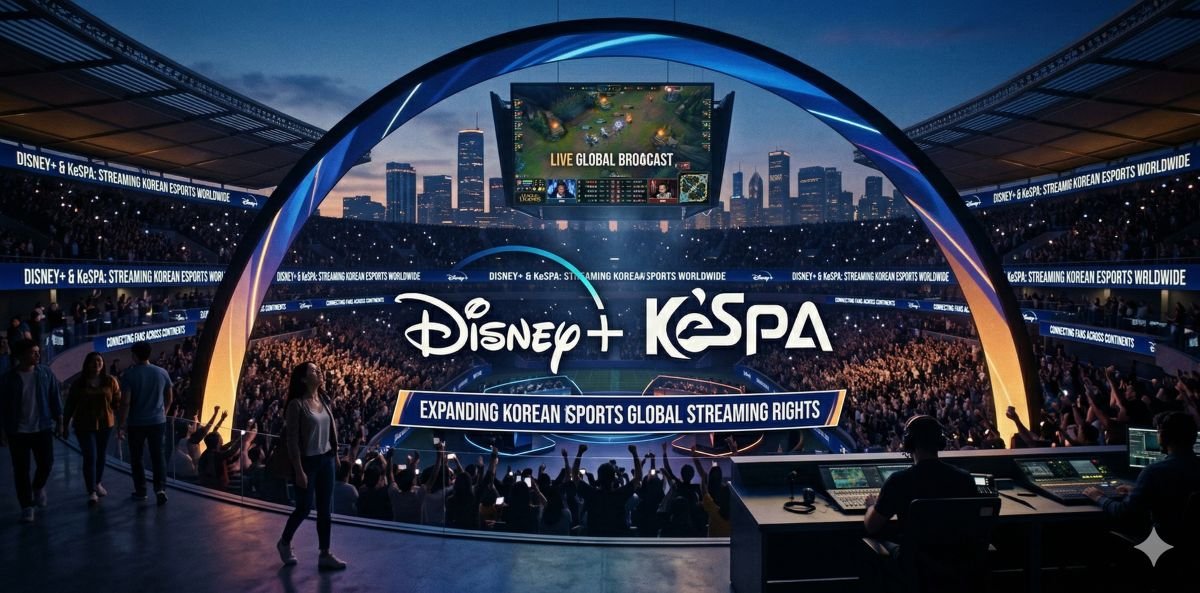
Disney+ has expanded its collaboration with KeSPA to include global livestreaming rights across three properties: the Esports Championships Asia Jinju 2026, the 2026 League of Legends KeSPA Cup, and preliminary events connected to the 20th Asian Games Aichi-Nagoya 2026, which runs from September 19 to October 4 in Japan.

The first event under the expanded agreement begins April 24–26 in Jinju, South Korea, where national teams from South Korea, China, Japan, Vietnam, Thailand, the Philippines, and Mongolia will compete across a slate of titles including Street Fighter 6, The King of Fighters XV, Tekken 8, eFootball, PUBG Mobile, and Eternal Return. ESPN branding will run across the broadcast, positioning the coverage within Disney’s broader live sports presentation framework rather than treating esports as a separate or secondary content category.

Disney+ will also exclusively livestream the Korean national team’s send-off ceremony and evaluation matches ahead of the Asian Games — coverage that sits at the intersection of national team sport and competitive gaming in a way that would have been unusual for a major global streaming platform to carry even three years ago.

From Open Platforms to Exclusive Subscription Access

The structural shift here is worth understanding clearly. The 2025 LoL KeSPA Cup was the first time the tournament aired on a major global streaming platform rather than on Twitch or YouTube. That broadcast reached viewers across eleven named Asia-Pacific markets, including South Korea, Japan, and Australia. The 2026 announcement expands that language to “global” — a change that signals growing ambition but does not yet confirm equal access across all markets.

For audiences in Anyang and the broader Gyeonggi-do region, this shift has practical implications. Content that was previously accessible through open platforms without a subscription is now routed through a paid service. The trade-off, from the rights holder’s perspective, is greater production investment and a more structured broadcast experience. Disney delivered bilingual commentary in Korean and English for the 2025 KeSPA Cup, along with on-demand replays, player interviews, and highlight packages — a broadcast product meaningfully different from what open streaming platforms had previously offered. Understanding how these platform decisions connect to broader shifts in how sports content reaches audiences is part of what makes the analysis at seoulmonthly.com on real-time event integration and betting system engagement useful context — it examines how live event distribution structures shape the decisions audiences make about where and how they engage with sports content.

A More Competitive Rights Landscape

Disney+ is not operating in isolation. The Korean esports streaming market is becoming more contested, and the competition is coming from multiple directions.

SOOP, the Korean streaming platform, has secured the exclusive Korean broadcast rights for the 2026 Overwatch Champions Series season and has partnered with LG Electronics to bring esports events to television screens — a distribution channel that extends reach beyond the streaming subscriber base entirely. Netflix, meanwhile, recently broadcast the 2026 World Baseball Classic exclusively in Japan, a move that broke local viewership records and demonstrated that subscription platforms can absorb major live sports events without losing audience.

What is emerging is a layered rights environment in which different platforms hold different properties across different regions, and audiences increasingly need to navigate multiple services to follow the content they care about. This is the same dynamic that has reshaped how Korean football and baseball fans access domestic league coverage, and it is now arriving in full for competitive gaming. The way broadcast rights shape access to Korean sports content is a pattern examined in the analysis of how K-League is using generative AI to transform its broadcast identity and what that signals for sports media production.

What This Means for Understanding Sports Content Distribution

The Disney–KeSPA deal is a useful case study in how sports content rights are being structured in the streaming era. The underlying contract was signed in September 2025 and runs through December 2026, meaning a significant portion of the 2026 programming calendar was committed before Disney had a complete read on how the 2025 KeSPA Cup performed. Rights deals of this kind are forward-looking bets on audience development rather than responses to proven demand.

For readers following how sports media works, that distinction matters. A platform acquiring exclusive rights to a property is not simply responding to existing viewership — it is attempting to build a subscriber relationship around content that audiences have not yet demonstrated they will pay to access. Whether that bet pays off shapes which tournaments remain visible, on which platforms, and at what cost to the audience that has followed Korean esports since the days when access was free.

The geography of Korean sports content is being redrawn, one rights deal at a time.


Analyzing the “Expected Points” Gap: FC Anyang’s Defensive Profile in Round 6

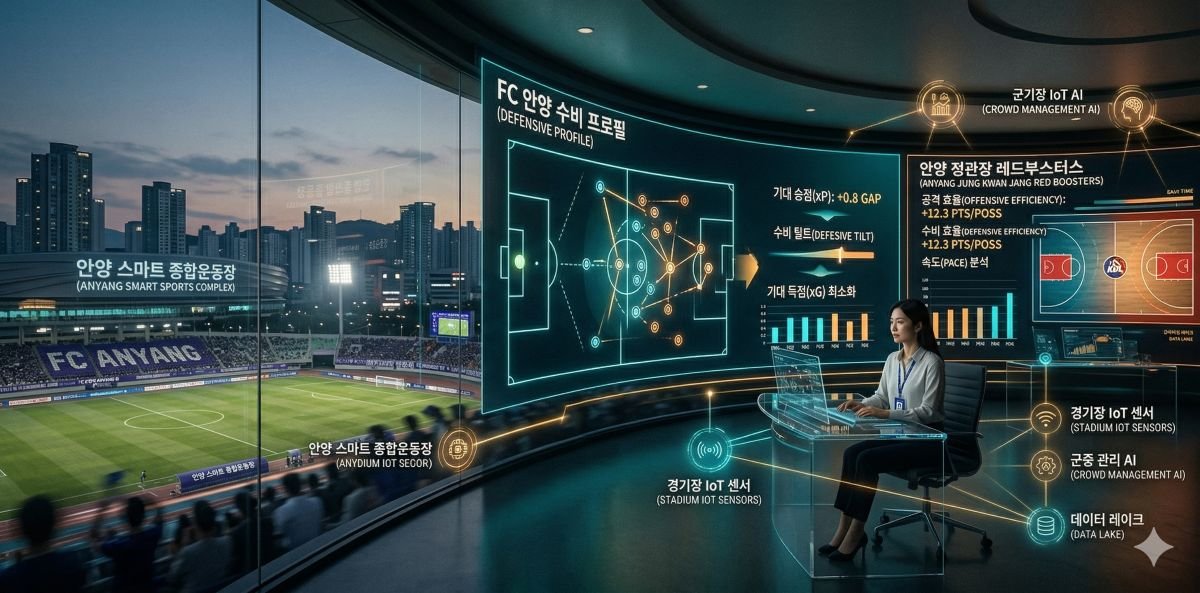
As the K League 1 2026 season moves into April, the statistical profile of FC Anyang has become a focal point for analysts. Following a 1-1 draw against league leaders FC Seoul on April 5, 2026, fresh data from the Professional Football Federation’s Technical Research Group (TSG) and tracking partner Vipro offers a clear view of the club’s defensive efficiency. Despite standing in eighth place, Anyang’s “Defensive Tilt” has improved significantly, suggesting that their current league position may not fully reflect their underlying performance.

The use of “Expected Points” (xP) and “Expected Position” (EXP) data has transitioned from a niche scouting tool to a standard part of the league’s official evaluation process. In the match against Seoul, Anyang’s defensive line maintained a concentrated structure that neutralized several high-probability scoring chances. This analytical approach relies on the 축구 기대 득점(xG)과 기대 도움(xA)의 힘 to determine whether a team’s results are a product of sustainable strategy or temporary variance. By measuring the quality of shots conceded rather than just the final score, the league’s technical committee can provide a more nuanced rating for the “Best XI” selections announced on April 8.

The Efficiency Metric: Anyang Red Boosters and the KBL Playoff Hunt

In the Korean Basketball League (KBL), the focus on April 8, 2026, is centered on the Anyang Jung Kwan Jang Red Boosters as they face the Seoul SK Knights. This matchup is a critical data point for the league’s playoff standings, where the “Winning Percentage” (PCT) and head-to-head tie-breakers determine the seeding for the upcoming semi-finals. Analysts are increasingly looking beyond basic box scores to evaluate team health through the lens of offensive and defensive efficiency.

The Red Boosters currently sit in the upper half of the standings, but their success is being measured by their ability to control the tempo of the game. Modern KBL analysis prioritizes 농구 분석의 핵심: 속도(Pace)를 초월한 공격 기회당 효율, which tracks how many points a team generates per possession rather than per game. This methodology is vital for understanding how a team like Anyang can remain competitive even when facing opponents with higher total scoring averages. The integration of live-syncing data providers allows fans to track these efficiency shifts in real time, transforming the viewing experience into a more analytical exercise.

The Data Frontier: Anyang Sports Complex as a “Data-Native” Hub

A broader industry shift is taking place in 2026, as sports organizations move toward becoming “data-native” entities. Reports published on April 8, 2026, highlight how Gyeonggi-do sports institutions, including the Anyang Sports Complex, are integrating centralized data systems to drive both fan engagement and operational safety. This transformation is part of a global trend where data is treated as a core infrastructure asset rather than a secondary resource.

At the regional level, this is visible in the adoption of digital signages and IoT-based safety systems. These tools use real-time crowd data to manage stadium flow and emergency evacuations, a move supported by major logistics and technology partnerships within the league. This shift toward high-speed information processing is detailed in the analysis of 데이터 전송 속도의 향상이 가져온 시장 구조의 다층화, which explains how technical infrastructure influences the wider sports landscape. As leagues adopt AI-powered predictive analytics, there is a growing need for fans to develop a stronger sense of digital literacy to navigate the abundance of information. Understanding these shifts is essential for audiences who must evaluate the credibility of the content they consume, as explored in the discussion on Generation Z sports content consumption.

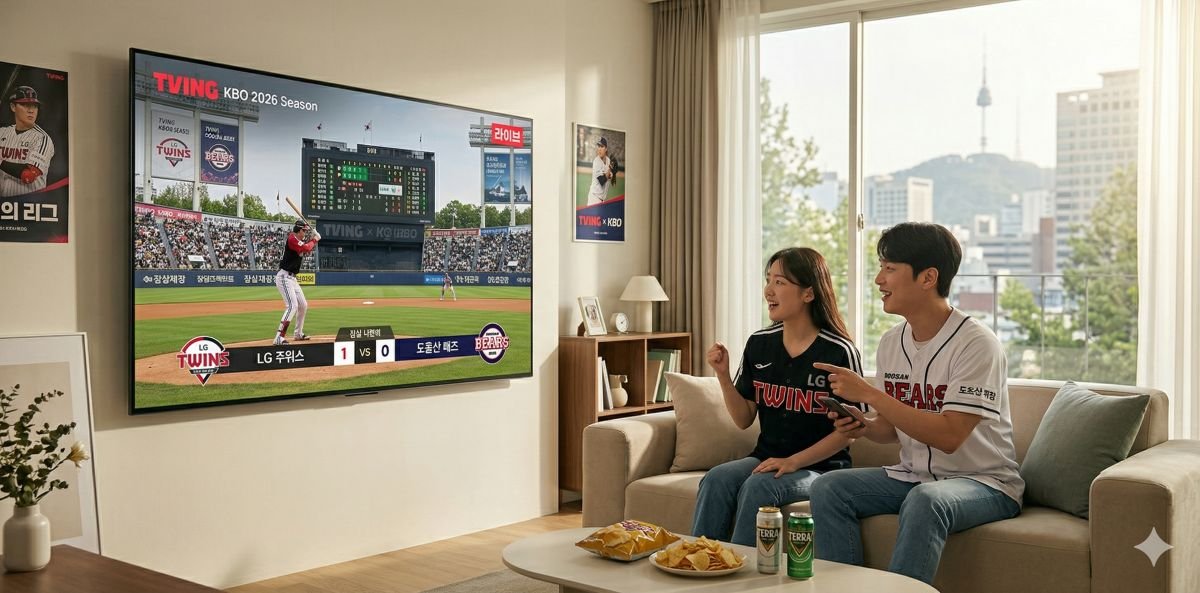
Why Korean OTT Subscribers Are Increasingly Signing Up for Sports: What the Tving-KBO Deal Tells Us About Changing Viewer Behavior

Something measurable has shifted in why Koreans subscribe to streaming platforms. Sports is no longer a secondary feature that occasionally justifies a subscription — it has become, for a growing segment of the market, the primary reason people sign up at all. The Tving-KBO deal and its renewal provide the clearest structural evidence of that transformation.

The Behavioral Data That Changed the Conversation

The shift is documented, not assumed. According to a report published by the Korea Creative Content Agency, 24.3 percent of OTT platform subscribers in South Korea said they subscribe specifically to watch sports broadcasts. That figure represents a sharp increase of 8.9 percentage points from the previous year’s 15.4 percent — a rise of more than half within a single measurement period.

The gender breakdown sharpens the picture further. Among male subscribers, 38.8 percent cited sports as their primary motivation for subscribing to an OTT platform, up 13.8 percentage points from the prior year. That is not a marginal change. It represents a fundamental reorganization of why a significant portion of the Korean streaming audience is paying for digital content services.

For platform operators, this kind of data is not incidental. It is a strategic signal. When a substantial and growing portion of subscribers can point to a single content category as their reason for being on the platform, that content category becomes foundational to retention — not simply additive to it.

The Deal That Tested the Theory

In 2024, Tving signed a three-year exclusive streaming rights contract with the KBO League valued at 135 billion won, approximately 93 million US dollars. The agreement covered the 2024 through 2026 seasons and carried a consequence that Korean baseball fans felt immediately: KBO games, which had previously been available to watch online for free through various portal and telecom partnerships, moved behind a paid subscription paywall for the first time.

This was not a minor adjustment to the viewing experience. It was a structural transformation in how Korean baseball could be accessed digitally. Fans who had never needed to subscribe to anything in order to follow their team now faced a choice: pay for Tving or lose access to live online coverage of 144 regular season games plus the postseason.

The market’s response answered the question that every platform executive running a similar calculation needs answered: would subscribers pay? The behavioral survey data suggests they did, and in growing numbers. The OTT subscription motivation data showing sports as a primary driver tracked directly alongside the KBO paywall era.

The Renewal That Confirms the Model

If the original deal was an experiment, the renewal announced for 2027 through 2031 is the industry’s verdict on the result. Tving agreed to a five-year extension valued at approximately 450 billion KRW — an average of 90 billion KRW per year. That per-season figure is double the value of the original three-year contract.

Rights holders do not double the price of content that failed to generate returns. Platforms do not agree to doubled prices for content they cannot monetize. The renewal valuation is the clearest signal available in the Korean sports media market that the subscription model built around exclusive KBO rights proved commercially viable across its initial three-year run.

This pattern is not unique to Korea. Globally, streaming platforms have identified live sports as the category most resistant to subscription cancellation, most effective at driving new sign-ups, and most capable of justifying price increases. What the Tving-KBO renewal confirms is that the Korean market has now joined that structural reality. Sports rights in Korea are no longer priced as entertainment content. They are priced as subscriber infrastructure.

Read also: https://jejumonthly.com/고객-지원-테스트하기-사이트가-사용자에게-정말-도/

What the Regulator Revealed

The most analytically precise confirmation of this dynamic came not from the platforms or the rights holders, but from the Korea Fair Trade Commission. When the FTC reviewed the proposed merger between Tving and Wavve — two of Korea’s major OTT platforms — it granted conditional approval with a specific condition: the merged entity must maintain current subscription fee levels through the end of 2026.

The reasoning the FTC offered for this condition is the analytically significant detail. The regulator stated explicitly that subscribers who highly value exclusive content, such as KBO League baseball coverage, would find it difficult to switch to alternative platforms. That difficulty — the functional inability to replicate the content experience elsewhere — is what economists and market analysts call a switching cost.

The FTC was not simply worried about price increases in a generic sense. It was recognizing that exclusive sports content creates a category of subscriber who is structurally locked in, not through contract or technical restriction, but through the absence of equivalent content anywhere else. That recognition, coming from an antitrust authority rather than a marketing department, carries particular weight. It confirms that Korean sports broadcasting rights now function as competitive infrastructure in a way that general entertainment content does not.

What This Means for the Broader Market

The three data points — the behavioral survey, the renewal valuation, and the FTC condition — connect into a single coherent story about how the Korean OTT market is being reshaped around sports.

For platform operators, the lesson is that exclusive sports rights are worth paying substantially more for than general entertainment rights, because the subscriber behavior they generate is more durable and more resistant to churn. For rights holders like the KBO, the lesson is that their content commands a different price in a market where platforms have demonstrated willingness to use sports as subscriber acquisition and retention infrastructure.

For fans and industry observers across Gyeonggi-do and beyond, the practical consequence is a streaming landscape increasingly organized around access rather than discovery — where whether you can watch a specific match depends not on what device you own, but on which subscription you hold.

How legal frameworks shape the way audiences interact with content platforms sits beneath all of these dynamics. For analytical context on how regulatory design influences user behavior within competitive digital markets, How Legal Structures Shape User Behavior provides useful structural framing that applies directly to the OTT sports rights environment.

The Tving-KBO deal will not be the last of its kind in Korea. The structural logic it established — exclusive rights, behavioral lock-in, regulatory recognition, rising renewal value — is now the template against which every future Korean sports streaming negotiation will be measured. For more context on how data availability has driven structural changes in content markets, How Data Availability Changed Betting Market Structures offers a parallel framework on how information access reshapes competitive dynamics.

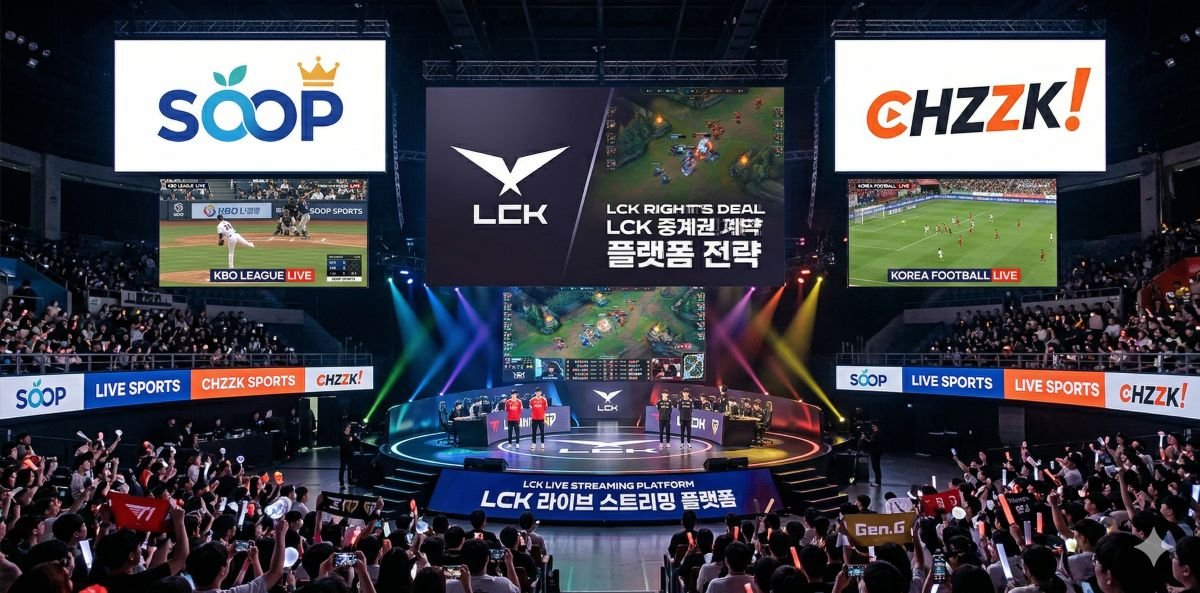
How SOOP and CHZZK Divided the Korean Live Sports Streaming Market — and What the LCK Rights Deal Tells Us About Platform Strategy

The Korean live sports streaming market has undergone a structural reorganization that most casual viewers have not fully noticed. What looks like a simple competition between two platforms is actually a more consequential story about how exclusive broadcast rights have become the primary lever of market control — and what that means for fans in Anyang and across Gyeonggi-do who rely on digital platforms for sports access.

How the Korean Streaming Market Got Here

To understand where things stand in 2026, it helps to understand the disruption that created the current landscape. For years, Twitch held a dominant position in Korean livestreaming, particularly in gaming and esports content. Korean audiences generated enormous viewership hours on the platform, and the ecosystem of streamers, commentary, and community built around it was self-sustaining.

When Twitch exited Korea in early 2024, citing the high cost of maintaining server infrastructure under local data regulations, it left behind a gap that neither a single platform nor an obvious successor could immediately fill. The audience did not disappear — it redistributed. Some moved to YouTube Gaming. The majority split between two Korean-native platforms: SOOP, which had rebranded from its former identity as AfreecaTV, and CHZZK, a streaming service built and backed by Naver, South Korea’s dominant internet company.

That split set the stage for the competition now playing out across the Korean streaming market.

The Two Platforms and Where They Stand

SOOP entered this period with significant advantages. Its history as AfreecaTV gave it decades of brand recognition, an established streamer community, and deep roots in Korean internet culture. The rebrand was designed to modernize its identity and signal global ambitions, and it largely succeeded in consolidating gaming audiences who moved away from Twitch.

CHZZK, by contrast, launched in late 2023 with essentially no legacy audience but with the full weight of Naver’s infrastructure behind it. Naver operates South Korea’s most used search engine, news platform, community boards, and payment systems. CHZZK launched into an ecosystem where its target users already had Naver accounts and were embedded in Naver-adjacent digital habits. Growth was rapid.

By early 2026, the two platforms operate at broadly comparable scale — a remarkable outcome for a service that did not exist before December 2023. CHZZK leads SOOP in total active channels and breadth of gaming content. SOOP maintains a slight edge in average concurrent viewership. On most meaningful metrics, the two platforms are genuinely competitive with each other, which is itself a significant structural development in a market that had previously been dominated by a single foreign platform.

Read also: https://daejeoninsider.com/카지노사이트-라이선스-진위-판별법/

The LCK Deal: Rights as Infrastructure

The most consequential single development in the Korean streaming landscape for 2026 is not a product feature or a streamer signing. It is a broadcast rights agreement.

Naver, through CHZZK, secured exclusive Korean-language broadcast rights to the League of Legends Champions Korea — the LCK — from 2026 through 2030, as part of a joint agreement that also includes SOOP Korea. The LCK is the single most-watched esports property in the Korean market. League of Legends viewership on Korean platforms consistently generates more hours watched than any other category, and the LCK sits at the top of that ecosystem.

The structural consequence of this deal is significant and deliberately constructed. Starting in 2026, YouTube is no longer a competitor for LCK content in the Korean language. Viewers who want to watch LCK matches through official Korean-language broadcasts must use either SOOP or CHZZK. The rights deal does not simply give these platforms premium content — it removes that content from every alternative and concentrates audience access within a defined duopoly.

This is what it means to use broadcast rights as competitive infrastructure rather than as a content supplement. The deal does not just attract viewers to these platforms; it structurally eliminates the option of going elsewhere. During the EWC 2025 League of Legends grand final, CHZZK alone drew over 360,000 Korean-language concurrent viewers — a figure that demonstrated the platform’s capacity to deliver at scale before the LCK exclusivity even took full effect.

The Pattern Extends Beyond Esports

The LCK deal is the most visible example of a broader dynamic operating across Korean digital media. When JTBC withdrew from broadcasting the 2026 Winter Paralympics due to profitability concerns, SOOP and CHZZK stepped in to acquire those rights. Traditional broadcast infrastructure retreated, and digital streaming platforms filled the gap — not through charity, but because acquiring rights that establish viewer habit and platform dependency is strategically valuable even when individual event viewership is modest.

This pattern — incumbent broadcasters retreating from secondary events and streaming platforms absorbing those rights — is accelerating. Each acquisition reinforces the habit of turning to digital platforms for sports access, which in turn makes those platforms more attractive for the next rights negotiation.

For fans in Anyang and surrounding Gyeonggi-do communities, this structural shift has direct practical consequences. The platforms that hold broadcasting rights determine what content is accessible, on what devices, and under what subscription or registration conditions. Understanding how rights deals function — not as passive content arrangements but as active tools of audience capture — is the foundational analytical skill for navigating sports media in 2026.

What Legal Structure Has to Do With It

The competitive dynamics between SOOP and CHZZK do not exist in a policy vacuum. The regulatory environment that governs Korean digital platforms shapes what rights deals are permissible, how exclusive arrangements are structured, and what obligations platforms carry toward users. How legal structures shape the behavior of users and platforms within competitive markets is a question that runs beneath the surface of every major streaming deal. For analytical context on that dimension, How Legal Structures Shape User Behavior provides useful framing on the relationship between regulatory design and audience engagement patterns.

The rights-driven reorganization of Korean sports streaming is still in early stages. The LCK exclusivity runs through 2030. The habits being built now — which platform fans reach for first, which interface feels native, which notification they tap when a match goes live — are the behavioral infrastructure that will determine market structure well beyond the current contract cycle.


Meta Title: How SOOP and CHZZK Divided Korean Sports Streaming — The LCK Rights Deal Explained

Meta Description: The Korean live sports streaming market has been reshaped by exclusive broadcast rights deals. This analysis explains how SOOP and CHZZK are using the LCK agreement as competitive infrastructure — and what it means for sports fans across Gyeonggi-do.

Target Keywords: SOOP CHZZK Korean streaming market, LCK broadcast rights 2026, Korean live sports streaming, CHZZK SOOP comparison, Korean esports streaming platforms, LCK exclusive rights Korea, AfreecaTV SOOP rebrand, Naver CHZZK sports rights, Korean streaming market analysis, sports broadcasting rights Korea

Suggested URL: /soop-chzzk-korean-sports-streaming-lck-rights-deal-explained

Why K League Attended a Global Sports Content Conference — and What It Reveals About the Business of Sports Broadcasting Rights

The Korea Professional Football Federation recently attended Sportel Singapore 2026, a two-day international conference gathering sports media officials from across the world to discuss broadcasting rights, broadcast technology, and digital content strategy. For readers in Gyeonggi-do following the growth of Korean football, this is more than a networking story — it is a window into how the global sports media industry actually works, and why leagues at every level now treat broadcasting as a core strategic asset.

What Sportel Singapore Is

Sportel Singapore is a two-day premium marketplace and conference summit gathering key decision-makers from across international sports media, broadcast, and technology sectors, with a strong focus on expanding opportunities in Asia and beyond.

The 2026 edition positioned itself at the intersection of rights, technology, and strategic growth, offering participants a platform to navigate new opportunities across the Asia-Pacific landscape. Confirmed participants included BeIN Sports, Fox Sports Australia, StarTimes, and Warner Bros., among others. The programme delved into key themes including European football’s commercial strategies in the Asia-Pacific region, content acquisition strategies, personalisation in streaming, and innovative content approaches such as the K League’s regional expansion efforts.

The Korea Professional Football Federation attended the event to inform the K League’s overseas business strategy and strengthen its overseas network, and announced plans to continue participating in major international conferences and industrial events to increase the K League brand’s value and expand global market contact points.

The decision to attend is not incidental. It reflects a deliberate calculation about where audiences, revenue, and content distribution are heading — and why Korean football needs to be present in those conversations.

How Broadcasting Rights Actually Work

Broadcasting rights are the legal agreements that give media companies — television networks, cable channels, or streaming platforms — the right to transmit a league’s matches to audiences. Leagues do not simply allow broadcasters to air their games. They sell that permission, often for substantial sums, under negotiated contracts that define exactly what can be shown, where, when, and on which platforms.

Media rights contracts are long-term agreements between sports leagues and media companies, including broadcasters and streaming platforms, that provide guaranteed annual payments for the right to broadcast games. These contracts ensure a stable and predictable revenue stream, which is critical for clubs’ financial planning.

The scale of these agreements at the highest levels of global sport illustrates why leagues treat rights negotiations as one of their most consequential strategic decisions. Media rights account for approximately 66% of total NFL revenue, and 54% of total NBA revenue. For leagues further down the global hierarchy — including K League — the proportion is smaller, but the underlying dynamic is the same: the more broadcast exposure a league secures, the more it can grow its fanbase, attract sponsors, and increase the value of future rights deals.

A broadcaster will typically want exclusive rights during the live window to broadcast a game on any platform — including television and digital. Promoters also want assurances that the broadcaster will produce a quality broadcast and distribute it via a network that can be received by the intended audience to ensure maximum exposure.

The Shift Toward Digital and Streaming

The global broadcasting rights industry is in the middle of a significant structural shift. Traditional television’s dominance is eroding as streaming platforms gain rights to live sports content that was previously available only on linear TV.

All MLS matches now stream live on Apple TV as part of a 10-year, $2.5 billion deal, representing a 450% boost in media revenue for the league. The NFL’s most recent rights package, worth $110 billion over 11 years, includes a streaming-only package with Amazon Prime Video for Thursday Night Football — the first of its kind for the league.

The K League has already begun its own shift in this direction. The Korea Professional Football Federation extended its comprehensive partnership with Coupang Play for five years, with Coupang Play continuing to broadcast all K League 1 and 2 games live on its platform. As part of the extended contract, AI upscaling technology will be introduced for new media live broadcasting to deliver clearer and more high-definition broadcasts.

This combination — exclusive new media rights plus investment in broadcast quality — mirrors exactly the strategy that larger leagues have executed when they moved into streaming. The platform carries all matches; the technology investment justifies the subscription.

Why Global Exposure Matters for a League Like K League

For K League, the ambition at events like Sportel Singapore is not simply to sell rights to the next overseas broadcaster. It is to position Korean football as a credible, growing product in a competitive international content market.

The symbiotic relationship between leagues and broadcasters is based on mutual need: broadcasters need sports to keep the lights on, and leagues need the reach of broadcast to guarantee they reach the largest possible audience. For a league expanding its global identity, every overseas broadcast deal — however modest in scale — builds the case for the next one.

The Asia-Pacific region is particularly significant in this context. Singapore serves as a strategic hub for media rights negotiations across Southeast Asia, giving leagues access to a market with rapidly expanding sports consumption and a growing appetite for international football content. K League’s presence at Sportel Singapore signals that the federation understands the geography of where its next audience growth will come from.

For readers in Anyang and across Gyeonggi-do interested in how digital media structures shape sports consumption, anyanginsider.com has a relevant overview of how online gambling regulation frameworks illustrate the way digital content markets are governed differently across regions.

The economics of sports broadcasting are not abstract — they determine which clubs receive investment, which leagues gain international recognition, and ultimately which matches fans can access and on what terms. When the K League attends a global content conference, it is participating directly in the process that shapes those outcomes. For more on how digital infrastructure shifts are driving structural change in sports media markets, seouldigest.com has examined the relationship between data transmission speed and the evolution of content delivery.

Korean football’s international media strategy is still developing. But the direction is clear — and events like Sportel Singapore are where that direction gets defined.

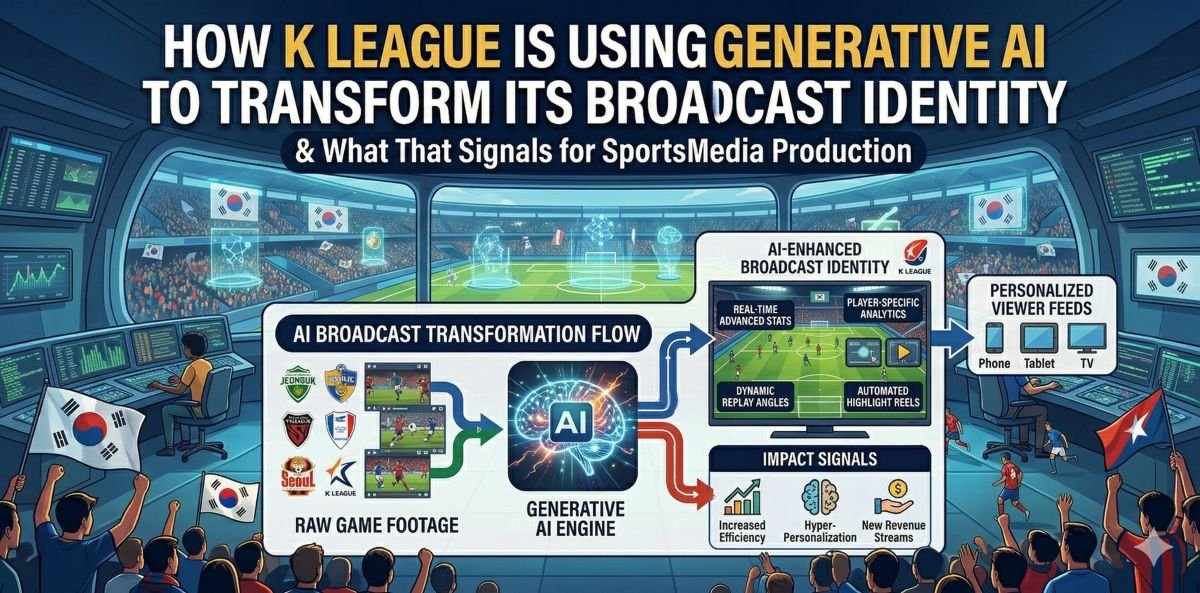
How K League Is Using Generative AI to Transform Its Broadcast Identity — and What That Signals for Sports Media Production

The K League’s 2026 season officially opened with a first in Korean football: a generative AI-produced intro video unveiled at the league’s Media Day event and deployed as the broadcast opening for the entire season. For an industry that has spent years discussing AI’s potential in sports, this marks a concrete step — and one that reflects a much broader shift in how leagues around the world are approaching content production.

What the K League Actually Did

At this year’s Media Day event, the official intro video of the 2026 season incorporating generative AI technology was released for the first time. The video, which captures the dynamics of the K League and the passion of fans with visual effects, will be used as a broadcast opening throughout the season.

The Korea Professional Football Federation also announced a major overhaul of K League broadcasting for the 2026 season more broadly — replacing graphics for the first time in five years since the introduction of unified broadcast graphics in 2021, and introducing special cameras designed to convey the dynamics of live play. Using an AI-based tracking system, player movements are provided in real-time graphics during broadcasts.

The AI intro video drew mixed reactions. Fans immediately applauded at the Media Day venue, but criticism followed on football community forums and the official K League YouTube channel. Viewers pointed to issues including awkward AI-generated gestures from players, incorrect stadium backgrounds assigned to clubs, and overall visual quality that fell below expectations — particularly given the disclosed production budget of 100 million won. The federation acknowledged the feedback and indicated it would consider revisions.

That tension — between the ambition of AI-generated visual identity and the current limitations of the technology — is itself instructive. It illustrates precisely where the sports media industry is right now: committed to the direction, still working through the execution.

What Generative AI Does in a Broadcast Context

To understand what the K League is actually attempting, it helps to understand what generative AI means in a media production context. Unlike traditional video production, which requires human editors, motion designers, and production crews to assemble footage, generative AI systems create visual content from learned patterns. They can produce sequences, textures, and visual effects based on prompts or source material — significantly reducing production time and cost.

AI-driven content platforms can plug into a league’s live video feed and instantly create highlight videos customized for any audience. In the first half of 2025 alone, one major AI sports platform generated over 8 million video clips for its partners — a 52% year-over-year increase — without requiring growth in editorial staff.

Beyond highlights, the technology is being applied to broadcast identity itself — the visual language that defines how a league looks and feels on screen. This is where the K League’s 2026 initiative sits: using generative AI not just as a content accelerator, but as a creative tool for the league’s own brand presentation.

Generative AI shifts the optimization problem in broadcast production by addressing what compression removes rather than simply how it removes it. Models learn the structure of high-quality video and use that understanding to reconstruct detail lost along the way — an approach that aligns well with sports, where motion is fast, textures are complex, and source quality is often uneven.

How Other Major Leagues Are Moving in the Same Direction

The K League’s decision does not exist in isolation. Across the global sports media industry, leagues and broadcasters have been accelerating AI adoption at the content production level.

Ahead of the 2025-26 season, Amazon rolled out an AI-led broadcast feed providing real-time tactical insights for the UEFA Champions League. The NBA has deepened its partnership with Amazon Prime and AWS to explore AI-driven production and data integration.

LaLiga has partnered with Microsoft to integrate AI into its operations, including match analysis, predictive analytics, and media production enhancements. Bundesliga is working with AWS to leverage AI for driving fan engagement and providing advanced data services.

At the FIFA World Cup 2026, planned AI deployments include enhanced digital broadcast visualization, intelligent operational command centers, and generative AI analytics platforms designed to manage massive real-time data volumes across venues and global media networks.

What the K League is doing at the intro video level, major global properties are doing across their entire broadcast infrastructure. The direction is consistent. The scale differs, but the underlying logic is the same: AI reduces production cost, accelerates content output, and enables leagues to build a more distinct and scalable visual identity across platforms.

Why This Matters for Sports Media Production

The K League’s AI intro is not simply a technology story. It signals a structural change in how sports organizations think about content ownership. When a league produces its broadcast identity using generative AI tools, it is taking more direct control over the visual language that represents it — rather than relying entirely on external production agencies working on traditional timelines.

Leagues that adopt AI-driven content pipelines report that tailored content can drive significant increases in video consumption, with the NBA’s personalized highlight system tripling app engagement and increasing total video views by around 700%.

In 2026, generative video is moving from a supporting role to a leading one. Experiments using it to create scenes and visual effects are breaking into primetime, with entertainment executives believing it will enable content to become richer rather than simply cheaper — though the technology remains contested.

For Korean football specifically, this development arrives at a significant moment. The 2026 season is the last under the current 12-team format, with structural changes coming in 2027. Bucheon FC 1995 is competing in the top flight for the first time. The audience for K League content — both domestic and international — is at an inflection point. Investing in broadcast identity now, even with the imperfections the AI intro exposed, reflects a longer-term calculation about how the league wants to present itself as it grows.

For readers across Gyeonggi-do interested in how digital media structures and online platform growth are reshaping content markets, anyanginsider.com has a useful overview of how digital experiences and regulatory frameworks shape the way content reaches audiences across different regions.

The K League’s generative AI experiment, criticism and all, positions Korean football as an early adopter in a shift that will define sports media production for the next decade. The technology will improve. The economics already make sense. And the leagues that establish their AI-driven content pipelines now will carry a structural advantage when scale becomes the defining challenge. For more on how digital infrastructure is reshaping sports media economics, economicseoul.com has examined the structural drivers behind digital platform growth in the sports and entertainment space.