

Why K League Attended a Global Sports Content Conference — and What It Reveals About the Business of Sports Broadcasting Rights

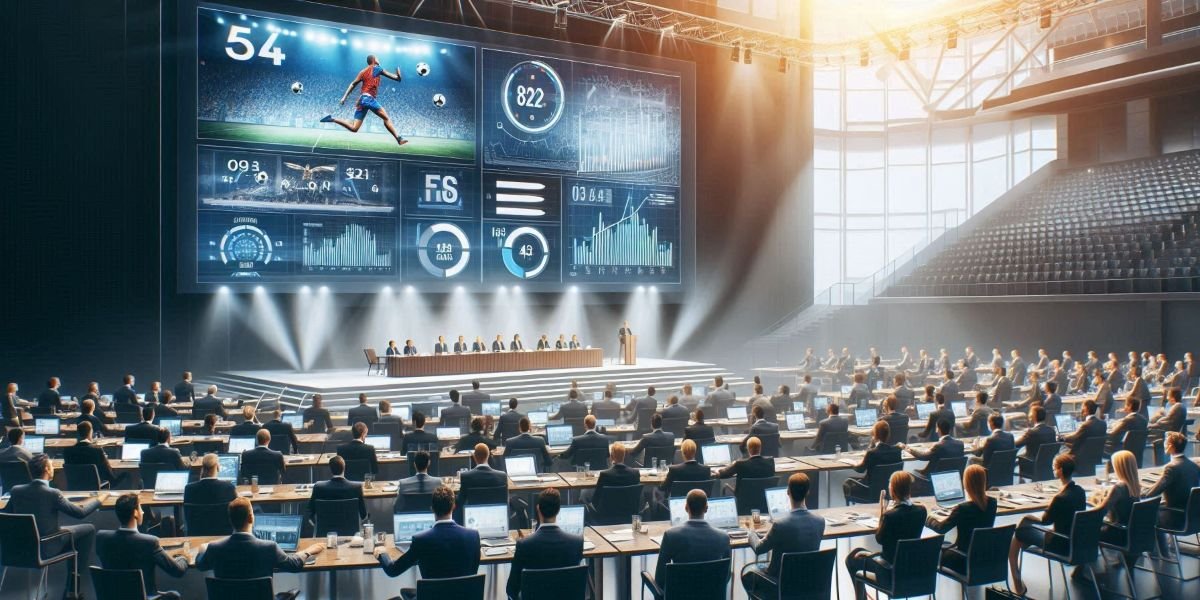
The Korea Professional Football Federation recently attended Sportel Singapore 2026, a two-day international conference gathering sports media officials from across the world to discuss broadcasting rights, broadcast technology, and digital content strategy. For readers in Gyeonggi-do following the growth of Korean football, this is more than a networking story — it is a window into how the global sports media industry actually works, and why leagues at every level now treat broadcasting as a core strategic asset.
What Sportel Singapore Is
Sportel Singapore is a two-day premium marketplace and conference summit gathering key decision-makers from across international sports media, broadcast, and technology sectors, with a strong focus on expanding opportunities in Asia and beyond.
The 2026 edition positioned itself at the intersection of rights, technology, and strategic growth, offering participants a platform to navigate new opportunities across the Asia-Pacific landscape. Confirmed participants included BeIN Sports, Fox Sports Australia, StarTimes, and Warner Bros., among others. The programme delved into key themes including European football’s commercial strategies in the Asia-Pacific region, content acquisition strategies, personalisation in streaming, and innovative content approaches such as the K League’s regional expansion efforts.
The Korea Professional Football Federation attended the event to inform the K League’s overseas business strategy and strengthen its overseas network, and announced plans to continue participating in major international conferences and industrial events to increase the K League brand’s value and expand global market contact points.
The decision to attend is not incidental. It reflects a deliberate calculation about where audiences, revenue, and content distribution are heading — and why Korean football needs to be present in those conversations.
How Broadcasting Rights Actually Work
Broadcasting rights are the legal agreements that give media companies — television networks, cable channels, or streaming platforms — the right to transmit a league’s matches to audiences. Leagues do not simply allow broadcasters to air their games. They sell that permission, often for substantial sums, under negotiated contracts that define exactly what can be shown, where, when, and on which platforms.
Media rights contracts are long-term agreements between sports leagues and media companies, including broadcasters and streaming platforms, that provide guaranteed annual payments for the right to broadcast games. These contracts ensure a stable and predictable revenue stream, which is critical for clubs’ financial planning.
The scale of these agreements at the highest levels of global sport illustrates why leagues treat rights negotiations as one of their most consequential strategic decisions. Media rights account for approximately 66% of total NFL revenue, and 54% of total NBA revenue. For leagues further down the global hierarchy — including K League — the proportion is smaller, but the underlying dynamic is the same: the more broadcast exposure a league secures, the more it can grow its fanbase, attract sponsors, and increase the value of future rights deals.
A broadcaster will typically want exclusive rights during the live window to broadcast a game on any platform — including television and digital. Promoters also want assurances that the broadcaster will produce a quality broadcast and distribute it via a network that can be received by the intended audience to ensure maximum exposure.
The Shift Toward Digital and Streaming
The global broadcasting rights industry is in the middle of a significant structural shift. Traditional television’s dominance is eroding as streaming platforms gain rights to live sports content that was previously available only on linear TV.
All MLS matches now stream live on Apple TV as part of a 10-year, $2.5 billion deal, representing a 450% boost in media revenue for the league. The NFL’s most recent rights package, worth $110 billion over 11 years, includes a streaming-only package with Amazon Prime Video for Thursday Night Football — the first of its kind for the league.
The K League has already begun its own shift in this direction. The Korea Professional Football Federation extended its comprehensive partnership with Coupang Play for five years, with Coupang Play continuing to broadcast all K League 1 and 2 games live on its platform. As part of the extended contract, AI upscaling technology will be introduced for new media live broadcasting to deliver clearer and more high-definition broadcasts.
This combination — exclusive new media rights plus investment in broadcast quality — mirrors exactly the strategy that larger leagues have executed when they moved into streaming. The platform carries all matches; the technology investment justifies the subscription.
Why Global Exposure Matters for a League Like K League
For K League, the ambition at events like Sportel Singapore is not simply to sell rights to the next overseas broadcaster. It is to position Korean football as a credible, growing product in a competitive international content market.
The symbiotic relationship between leagues and broadcasters is based on mutual need: broadcasters need sports to keep the lights on, and leagues need the reach of broadcast to guarantee they reach the largest possible audience. For a league expanding its global identity, every overseas broadcast deal — however modest in scale — builds the case for the next one.
The Asia-Pacific region is particularly significant in this context. Singapore serves as a strategic hub for media rights negotiations across Southeast Asia, giving leagues access to a market with rapidly expanding sports consumption and a growing appetite for international football content. K League’s presence at Sportel Singapore signals that the federation understands the geography of where its next audience growth will come from.
For readers in Anyang and across Gyeonggi-do interested in how digital media structures shape sports consumption, anyanginsider.com has a relevant overview of how online gambling regulation frameworks illustrate the way digital content markets are governed differently across regions.
The economics of sports broadcasting are not abstract — they determine which clubs receive investment, which leagues gain international recognition, and ultimately which matches fans can access and on what terms. When the K League attends a global content conference, it is participating directly in the process that shapes those outcomes. For more on how digital infrastructure shifts are driving structural change in sports media markets, seouldigest.com has examined the relationship between data transmission speed and the evolution of content delivery.
Korean football’s international media strategy is still developing. But the direction is clear — and events like Sportel Singapore are where that direction gets defined.