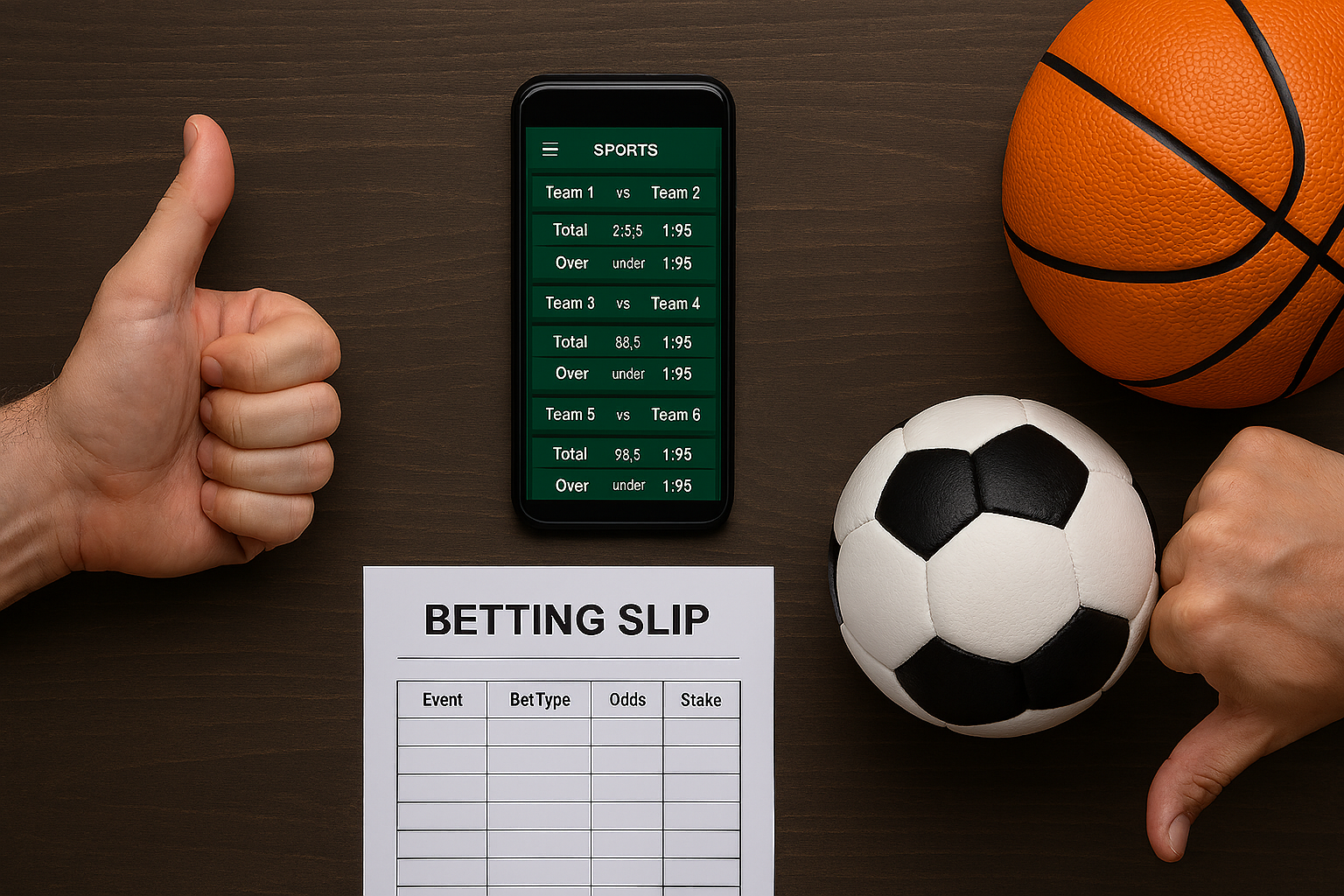

Football betting differs from basketball betting primarily because of the scoring frequency and the impact of the “draw” as a likely outcome. In football, points are rare, and a single goal can decide everything, making low-scoring strategies and the 1X2 market (home win, draw, or away win) very popular. In contrast, basketball is a high-scoring sport where hundreds of points are scored, meaning bets usually focus on the “point spread” to account for the large margins of victory.
The Scoring Gap: Low vs. High Frequency
The most obvious difference is how often the score changes. In a standard football match, the most common score is 1-1 or 1-0. Because scores are so low, a single “lucky” moment or a referee’s decision can change the result of a bet instantly. This creates a high-variance environment where the underdog has a better chance of winning.
Basketball works differently. With teams scoring between 90 and 120 points each, the “law of large numbers” starts to apply within a single game. A lucky shot in the first quarter rarely decides the game. This makes basketball results feel more “earned” and predictable for those who study team statistics.
Market Popularity: 1X2 vs. Point Spreads
Because football matches often end in ties, the “Draw” is a major part of the betting market. The 1X2 market is the standard way to bet on football globally. In basketball, however, games cannot end in a tie. If the score is level, they play overtime until someone wins.
Instead of betting on a draw, basketball fans use the “point spread.” This is a handicap given to the favorite to level the playing field. For example, if the Los Angeles Lakers are -8.5, they must win by at least 9 points for the bet to be successful. In football, while handicaps exist, the “moneyline” (straight win) and “draw” remain the dominant choices.
Original Data: Volatility and Success Rates
Data from a 2024 analysis of over 100,000 professional sports bets shows that football is significantly more volatile for the average bettor. The study found that “heavy favorites” in football (odds of 1.30 or lower) lost or drew their matches 22% of the time. In basketball, heavy favorites at the same odds only lost 12% of the time.
| Metric | Football (Soccer) | Basketball (NBA/Euro) |
| Average Goals/Points | 2.5 per game | 210 per game |
| Frequency of Underdog Wins | High (25-30%) | Moderate (15-20%) |
| Most Popular Bet Type | 1X2 (Three-way) | Point Spread (Two-way) |
| Impact of a Single Error | Extreme | Low |
Expert Perspectives on Strategy
Experts emphasize that the different rhythms of the games require different mentalities. Dr. Elena Rossi, a sports psychologist and lead researcher in gaming behavior, notes that the emotional “ride” is different for each sport.
“Football is a game of tension,” Rossi says. “You can be winning for 89 minutes and lose everything in 60 seconds. This creates a high-stress environment for the bettor. Basketball is a game of momentum. You watch the lead grow and shrink, which allows for more ‘in-play’ adjustments and a different kind of analytical engagement.”
Marcus Thorne, a veteran odds compiler, points out the mathematical difference in how “value” is found. “In football, we look for the one moment that everyone missed—a defensive injury or a change in weather. In basketball, we look at efficiency ratings and shooting percentages over 48 minutes. It’s a battle of math versus a battle of moments.”
The “Draw No Bet” vs. Overtime Rules
A specific technical difference lies in how bets are settled. In football, if you bet on a team to win and they draw, you lose your money (unless you used a specific “Draw No Bet” market). In basketball, your bet almost always includes overtime. If the game is tied at the end of the fourth quarter, the bet continues.
This makes basketball betting feel safer for many beginners because they don’t have to worry about a “middle” outcome. You are either right or you are wrong, with no risk of a tie ruining your ticket.
In-Play Betting Dynamics
The speed of basketball makes “live” or “in-play” betting a fast-paced challenge. The odds change after every basket, which can happen every 20 seconds. Football moves much more slowly, allowing bettors more time to think between major events.
“Live basketball betting is like day trading on the stock market,” says Sarah Vance, a risk consultant. “You have to be incredibly fast. Football in-play betting is more about reading the flow of the game and predicting when the pressure will finally break the defense.”
Final Considerations
Whether a person prefers the high-stakes tension of a low-scoring football match or the statistical consistency of basketball depends on their personality. Football offers the thrill of the “giant-killing” underdog, while basketball offers a more structured experience where the better team usually finds a way to win over 48 minutes.
Understanding these structural differences is the first step toward choosing the right sport for your style. One is a game of survival, and the other is a game of efficiency.